Showing posts with label land. Show all posts

Wednesday, June 17, 2015

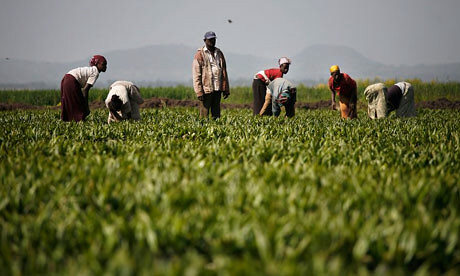
To fight desertification, let's manage our land better

Every year, we lose 24 billion tons of fertile soil to erosion and 12 million hectares of land to desertification and drought. This threatens the lives and livelihoods of 1.5 billion people now.

In the future, desertification could displace up to 135 million people by 2045. Land degradation could also reduce global food production by up to 12% and push world food prices up by 30%. In Egypt, Ghana, Central African Republic, Pakistan, Tajikistan and Paraguay, land degradation could cause an annual GDP loss of up to 7%.

Pressure on land resources is expected to increase as populations grow, socio-economic development happens and the climate changes. A growing population will demand more food, which means that unsuitable or especially biodiverse land will be claimed for farming and be more vulnerable to degradation. Increased fertilizer and pesticide use related to agriculture will increase nutrient loading in soils, causing eutrophication and declines in fertility over time. Climate change will also aggravate land degradation—especially in drylands, which occupy 40% of global land area, and are inhabited by some 2 billion people. Urban areas, which are located in the world’s highly fertile areas, could grow to account for more than 5% of global land by mid-century.

Unless we manage our land better, every person will rely on just .11 hectares of land for their food; down from .45 hectares in 1960.

So how do we manage land better?

It will all come down to what we do with our soil, which is the most significant natural capital for ensuring food, water, and energy security while adapting and building resilience to climate change and shocks. The soil’s nutrient cycling provides the largest contribution (51%) of the total value (USD33 trillion) of all ‘ecosystem services’ provided each year. But soil’s important function is often forgotten as the missing link in our pursuit of sustainable development.

We must invest in applicable solutions that are transformative, and can be scaled up. Climate-smart agriculture is an alternative approach to managing land sustainably whilst increasing agricultural productivity. It includes land management options that sequester carbon and enhance resilience to climate change. Proven climate-smart practices such as agroforestry, integrated soil fertility management, conservation agriculture, and improved irrigation can ensure that land is used optimally, restored and managed in a manner that maximizes ecological, economic and social benefits.

But climate-smart agriculture requires conducive policy frameworks, increased investment, and judicious policy management. Rural poverty is often a product of policies that discriminate against small landholders, forcing them off the land, creating sub-optimal land use outcomes, and long term degradation. Secure land rights are necessary for climate-smart agriculture, providing incentives for local communities to manage land more sustainably. In Rwanda, for instance, land tenure reform rapidly doubled investment in soil conservation, with even larger increases for plots managed by female farmers.

Second, there is need for increased national investment in climate smart agriculture. For technologies such as conservation agriculture that require substantial up-front investment in machinery and other inputs, schemes such as those involving payment for ecosystem services may be more effective in promoting CSA technology adoption. For technologies such as agroforestry systems, innovative finance mechanisms that help farmers bridge the period between when trees are planted, mature and generate income can be decisive.

Third, in some cases, direct public investment in landscape restoration and rehabilitation can bring about sizeable livelihood benefits and create better conditions for attracting further investments by farmers and communities. The China Loess Plateau is a well-documented success story of landscape restoration. Similar experiences are happening in Ethiopia, Kazakhstan and Senegal.

Fourth, a number of improved land management technologies are knowledge-intensive, and promoting their adoption will require training. Conservation agriculture for instance entails sophisticated combinations of no-tillage, residue management, use of cover crops, and other activities and practices that many farmers have limited experience with. The knowledge base of local land management practices can also be improved through targeted capacity development programs.

Many demand-side interventions can strategically break the adoption barriers associated with climate-smart practices. These include: providing farmers with improved weather forecasting, weather-indexed crop insurance, and measures to reduce production variability such as drought-tolerant crops, deep-rooted crops, and irrigation. These should be combined with supply-side measures such as lowering trade barriers to increase national and regional market size, improving road and rail infrastructure to lower transport costs, and improving market information systems to increase farmers’ access to markets.

Lastly, public support is as crucial as the amount of support to fully realize the productivity, adaptation, and mitigation benefits in agriculture. Public support that focuses on research, investments in improved land management, and land tenure rather than on input support is generally more effective, benefits more farmers, and is more sustainable in the long run.

Actions to reduce the negative impacts of land degradation and desertification must indeed go hand in hand with interventions that eradicate poverty and address inequality. Without them, we will not end poverty and boost shared prosperity. More


Friday, May 30, 2014

Corporate stranglehold of farmland a risk to world food security, study says

The world's food supplies are at risk because farmland is becoming rapidly concentrated in the hands of wealthy elites and corporations, a study has found.

Small farmers, the UN says, grow 70% of the world's food but a new analysis of government data suggests the land which they control is shrinking every year as mega-farms and plantations squeeze them onto less than 25% of the world's available farmland, says international land-use group Grain. These mega-farms are less productive in terms of amount of food they produce per area of land, the report argues.

"Small farms have less than a quarter of the world's agricultural land – or less than 20% excluding China and India. Such farms are getting smaller all the time, and if this trend persists they might not be able to continue to feed the world," says the report which draws on government statistics and calls for a stop on land grabbing by corporations.

The report suggests that the single most important factor in the drive to push small farmers onto ever smaller parcels of land is the worldwide expansion of industrial commodity crop farms. "The powerful demands of food and energy industries are shifting farmland and water away from direct local food production to the production of commodities for industrial processing," it says. The land area occupied by just four crops – soybean, oil palm, rapeseed and sugar cane – has quadrupled over the past 50 years. Over 140 million hectares of fields and forests have been taken over by these plantations since the 1960s – roughly the same area as all the farmland in the EU.

"What we found was shocking," said Henk Hobbelink of Grain. "If small farmers continue to lose the very basis of their existence, the world will lose its capacity to feed itself. We need to urgently put land back in the hands of small farmers and make the struggle for agrarian reform central to the fight for better food systems."

Big farms have been getting bigger nearly everywhere with rising numbers of small and medium-sized farmers going out of business in the past 20 years, say the authors. Belgium, Finland, France, Germany and Norway in western Europe have each lost about 70% of their farms since the 1970s while Bulgaria, Estonia, the Czech Republic and Slovakia each lost over 40% of their farms from 2003 to 2010. Poland alone lost almost 1m farmers between 2005 and 2010.

"Within the EU as a whole, over 6m farms disappeared between 2003 and 2010, bringing the total number of farms down to almost the same level as in 2000, before the inclusion of 12 new member states with their 8.7m new farmers," says the report , released with international peasant organisation Via Campesina.

But the concentration of land ownership is seen on every continent. Argentina lost more than one-third of its farms in the two decades from 1988 to 2008. Between 1997 to 2007, Chile lost 15% of its farms with the biggest farms doubling their average size, from 7,000 to 14,000 ha per farm. The United States has lost 30% of its farms in the last 50 years. Here, the number of very small farms has almost tripled, while the number of very large farms has more than quintupled.

In addition most farms have been getting smaller over time due to factors such as population pressure and lack of access to land. In India, the average farm size roughly halved from 1971 to 2006. In China, the average area of land cultivated per household fell by 25% between 1985 and 2000. In Africa, average farm size is also falling.

The authors say land reform is urgently needed if enough food is to be grown to feed everyone. "What we see happening in many countries ... is a kind of reverse agrarian reform, whether it's through corporate land grabbing in Africa, the recent agribusiness-driven coup d'état in Paraguay, the massive expansion of soybean plantations in Latin America, the opening up of Burma to foreign investors, or the extension of the European Union and its agricultural model eastward," says Hobbelink.

"In all of these processes, control over land is being usurped from small producers and their families, with elites and corporate powers pushing people onto smaller and smaller land holdings, or off the land entirely into camps or cities," he said.

The takeover of small farmers' land is now accelerating, says the report with nearly 60% of this land use change occurring in the past 20 years. The report estimates that 90% of all farms worldwide are "small", holding on average 2.2 hectares.

The report also found that small farmers often twice as productive as large farms and are more environmentally sustainable. "Although big farms generally consume more resources, control the best lands, receive most of the irrigation water and infrastructure ... they have lower technical efficiency and therefore lower overall productivity. Much of this has to do with low levels of employment used on big farms in order to maximise return on investment.

"Our data [suggests] that if all farms in Kenya had the current productivity of the country's small farms, Kenya's agricultural production would double. In Central America and Ukraine, it would almost triple. In Hungary and Tajikistan it would increase by 30%. In Russia, it would be increased by a factor of six," the report says.

"Beyond strict productivity measurements, small farms also are much better at producing and utilising biodiversity, maintaining landscapes, contributing to local economies, providing work opportunities and promoting social cohesion, not to mention their real and potential contribution to reversing the climate crisis."

The most productive farmers in the world are possibly found in Botswana, the report argues, where 93% of the farmers have small patches of land but together they grow all the country's groundnuts, 99% of its maize, 90% of the millet, 73% of beans and 25% of the sorghum on just 8% of the farmland. More


Monday, September 23, 2013

International Experts Discuss Opportunities for Securing Local Community Land Rights

20 September 2013: The conference on 'Scaling-Up Strategies to Secure Community Land and Resource Rights: An International Conference to Take Stock of Current Efforts, Identify Promising Strategies, and Catalyze New Alliances and Action' concluded with participants from across 40 countries calling for a doubling of the amount of secured community land over the next five years.


The conference, which was took place from 19-20 September 2013, in Interlaken, Switzerland, brought together over 180 participants representing governments, local communities, Indigenous Peoples' organizations, private investors, food and resource companies, and conservation organizations, all of which have a common interest in clarifying and securing the ownership of community lands and resources.


The event aimed to raise the profile and prioritization of community land rights as a global concern, catalyze new ideas and alliances, and secure commitments to take these strategies forward in the coming months and years. Participants met in plenary and in strategy sessions to discuss themes related to: securing community land and resource rights; mapping and documenting; improving legal recognition and empowerment; expanding and leveraging private sector interests in securing community land rights; making community land rights a global priority; and deepening synergies between community land and resource rights and conservation efforts.


The main priorities that emerged from the sessions, as well as opportunities for scaling up existing opportunities and recommended next steps, included: starting the restitution of indigenous lands from conservation areas; striving to reach the target of doubling the amount of secured community lands; improving the effectiveness of existing instruments to secure rights; using maps effectively to secure rights; and improving internal community governance.


The meeting was co-organized by the Rights and Resources Initiative (RRI), the International Union for Conservation of Nature (IUCN), the International Land Coalition (ILC), Helvetas Swiss Intercooperation and Oxfam. [Meeting Website] [IISD RS Meeting Coverage]

More:


Tuesday, March 19, 2013

Undercover sting exposes Malaysia land-grab

Allegations of corruption get louder following secret tapes showing plunder of resource-rich Sarawak province.

Mountains of Borneo Island

Long Napir, Malaysia - Plantations and logging are ravaging Malaysia's majestic Borneo region and indigenous people who have lived for centuries here say they are increasingly being uprooted from their once-pristine lands.

But as the timber and palm oil companies swarm over the rugged landscape of resplendent rivers and ancient rainforests, villagers in Long Napir in the country's biggest state Sarawak have vowed to thwart any further land-grabs.

The village is a settlement of longhouses, the traditional communal housing favoured by indigenous people in eastern Malaysia's Borneo island.

Under the Sarawak Land Law, indigenous people have rights over areas as long as they can prove they have lived in or used the lands prior to January 1, 1958.

"We have no land to farm, our rivers have become muddy, there's hardly any fish left anymore."

- Tamin Sepuluh Ribu, villager

But the surrounding ancient rainforests that are so essential to their traditional way of life is under threat because of logging and plantation companies. Over the past 30 years, Sarawak - one of the richest Malaysian states - has become one of the largest exporters of tropical timber.

Despite its wealth, profits have failed to trickle down, and the people here are some of the poorest in the country.

Long Napir villagers lay the blame for their plight squarely on one man: the state's powerful chief minister, Abdul Mahmud Taib, who is in charge of all land classification and the allocation of lucrative forestry and plantation licenses.

"He lives, the rest of us suffer," Tamin Sepuluh Ribu, a former village headman, told Al Jazeera. "We have no land to farm, our rivers have become muddy, there's hardly any fish left anymore."

'Coterie of cronies'

Global Witness, a non-governmental organisation working against environmental exploitation, has investigated and exposed the situation in remote eastern Malaysia.

An undercover Global Witness investigator posing as an investor was offered several opportunities to purchase land in Sarawak by company officials linked to Chief Minister Taib. In each instance, the land in question was occupied by indigenous communities, who have valid claims to ownership rights under Malaysian law.

Global Witness said the indigenous areas were being sold by companies with close personal or political ties to the chief minister.

Taib has held the post since 1981, and has been repeatedly accused of corruption during his nearly 32-year rule.

The US Embassy in Kuala Lumpur noted in one cable released by WikiLeaks: "Chief Minister Taib Mahmud … doles out timber-cutting permits while patrolling the underdeveloped state using 14 helicopters, and his family's companies control much of the economy."

The American cable added that, "All major contracts and a significant portion of land to be converted to palm oil plantations [including on indigenous 'customary land rights' that the state government has refused to recognize] are given to these three companies."

People in Sarawak are "fed up" with Taib's administration, "seen as only enriching his family and a small coterie of cronies", it said.

A Penan girl deep in the Borneo rainforests [EPA]

Under investigation

Global Witness released a November 2012 report titled, "In the future, there will be no forests."

"Taib's powerful executive position and personal responsibility for the issuance of lucrative logging and plantation licences has enabled him to systematically extract 'unofficial payments' from the state's timber tycoons for the enrichment of himself and his family," the report said.

Taib, meanwhile, denied the corruption allegations as "wholly untrue and malicious", said the report.

In 2011, the Malaysian Anti-Corruption Commission launched an official investigation into Taib, which continues at present.

In secretly taped negotiations provided to Al Jazeera, the Global Witness investigator discussed buying land with company shareholders Fatimah Abdul Rahman and Norlia Abdul Rahman - Taib's first cousins. Fatimah admitted the parcel of land under discussion had been transferred to them by Chief Minister Taib.

"Yeah, he's the one who gave us the land. He's my cousin," Fatimah said, laughing.

In 2011, Taib gave his cousins 5,000 hectares of land for about $300,000 dollars, according to leaked land registry documents. Having secured agriculture and timber licences, they were trying to sell it a year later for more than $16mn.

Later, discussing the ease of receiving a forestry license, Fatimah told the Global Witness investigator: "The Land and Survey Department, they are the ones that issue this licence. Of course, this is from the CM's [Chief Minister's] directive, but I can speak to the CM very easily." More


Tuesday, March 12, 2013

Land Grabs Spread Throughout Developing World

Food Justice advocates have always argued that trade agreements need to respect and promote human rights, not drive a process of globalization that privileges commercial interests and tramples on public interests. In my new paper on land grabs from the Institute for Agriculture and Trade Policy, that position is affirmed.

“Land grabs” are large-scale purchases or leases of agricultural or forested land on terms that violate the rights of the people who live on or near that land. The problem has commanded enormous public policy and media attention for the last few years. In our paper, IATP sets some context for the land grabs phenomenon. We focus on two forces that have contributed significantly to the problem:

Globalization, or the deregulation of trade and foreign investment laws, which has greatly eased cross-border capital flows; relaxed the limits on foreign land ownership; and, opened markets to agricultural imports.

The food price crisis of 2007-08, which highlighted how fragile food systems in many parts of the world have become, and which shattered the confidence of net-food importing countries in international markets as a source of food security.

The situation is compounded by climate change and the resulting destabilization of weather patterns, which in turn has made agricultural production less predictable. Climate change has made domestic food supplies less certain and exports, too. In 2012, The United States, still a huge source of grains for international markets, lost 40 percent of a record large number of acres planted with corn to drought.

The sense of food insecurity has driven some of the richer net-food importers—countries such as Saudi Arabia and Kuwait—to invest in growing food abroad for import to their domestic markets. That is one driver of land grabs.

The sense that our food systems are fragile and that supplies are scarce, where for decades they have been abundant, is another driver—companies such as South Korea’s Daewoo are looking to source raw materials directly, rather than buying them on the market.

It’s not that investment in agriculture is a bad thing. Indeed, it’s sorely needed. But unless we have the conversation about what kind of investment, in what kind of agriculture, and in whose interests, then the investment does more harm than good.

Land grabs, as the label implies, have been overwhelmingly negative. They are associated with weak institutional capacity (and sometimes corruption) in the recipient country governments, as well as authoritarian governments in the investors’ home countries, making it hard to bring pressure there for better practices. The communities whose land is leased or bought are not adequately protected.

IATP proposes four linked policy shifts to create a more stable and transparent international food system:

1) Reformed trade rules that ensure export restrictions in times of crisis are subject to transparency and predictability requirements and that allow all countries policy space for food security policies;

2) Publicly-managed grain reserves to dampen the effects of supply shocks;

3) Readily accessible funding for the poorest food importers, which would be triggered automatically when prices increase sharply in international markets; and

4) The development of strong national and international laws to govern investment in land, respecting the principles and guidelines set out in the Voluntary Guidelines on Land Tenure. Tanzania’s recently announced limits on how much land foreign and domestic investors can lease is a hopeful example of a national government taking the initiative to get serious about regulation. More


Monday, February 25, 2013

Corporations Grabbing Land and Water Overseas

As a growing population stresses the world's food and water supplies, corporations and investors in wealthy countries are buying up foreign farmland and the freshwater perks that come with it.

From Sudan to Indonesia, most of the land lies in poverty-stricken regions, so experts warn that this widespread purchasing could expand the gap between developed and developing countries.

The “water grabbing” by corporations amounts to 454 billion cubic meters per year globally, according to a new study by environmental scientists. That’s about 5 percent of the water the world uses annually.

Investors from seven countries – the United States, United Arab Emirates, India, United Kingdom, Egypt, China and Israel – accounted for 60 percent of the water acquired under these deals.

Most purchasers are agricultural, biofuel and timber investors. Some of the more active buyers in the United States, which leads the pack in number of deals, include multinational investors Nile Trading and Development, BHP Billiton, Unitech and media magnate Ted Turner, according to the study published last month.

Wendy Wolford, a professor at Cornell University who studies political and social impacts of international land deals, said while it is difficult to tease out investor motives, they “don’t grab land in places without access to water.” Some countries – including Indonesia, the Philippines and the Democratic Republic of Congo – had large amounts of water rights grabbed because they’re countries with a lot of rainfall.

Since 2000, 1,217 deals have taken place, which transferred over 205 million acres of land, according to the public database Land Matrix. About 62 percent of these deals were in Africa – totaling about 138 million acres, roughly the size of two Arizonas.

For countries reliant on farming and already suffering from poverty, the potential impacts are huge, said Paolo D’Odorico, a University of Virginia professor and co-author of the new report that estimates the water supplies at stake. About 66 percent of the total deals are in countries with high hunger rates.

“In many of these countries, the sum of the water being grabbed would be enough to eliminate malnourishment,” said D’Odorico, who collaborated with scientists from Italy’s Polytechnic University of Milan.

Wolford said there is danger that local people – especially in places like sub-Saharan Africa – are not aware of land purchases and how it could affect their way of life.

“That’s probably the biggest problem – people could have gathered timber from the woods or lived downstream of the land grabbed,” Wolford said. “These things could be taken away without them knowing what happened.”

Food crisis, biofuels spur “grabbing”

Such land deals are often derisively dubbed “land grabbing,” which D’Odorico defines as a deal for about 500 acres or more that converts an environmentally important area currently used by local people to commercial production. More


Thursday, February 14, 2013

Land Is Life, and It’s Slipping Away

PHNOM PENH, Feb 14 2013 (IPS) - Nean Narin, a humble man and father of three children, says his family is going hungry. Narin lives in the village of Boeung Kak, situated on the edge of Cambodia’s capital, Phnom Penh. For years, he and other villagers relied on the Boeung Kak Lake for fish and plants, which they would eat and sell.

Displaced families in this relocation site outside Phnom Penh

But in mid-2008, construction workers began pumping sand into the lake “in preparation for the development of a 133-hectare commercial and housing project” sponsored by Shukaku, Inc. — a Cambodian firm owned by a Senator of the ruling Cambodian People’s Party – and leased to the Chinese-owned Erdos Hong Jun Investment Co., Ltd.

Over the next four years, the project would displace over 3,000 families.

Narin and his neighbour Tep Vanny, along with a many others, refused to leave and now live a hand-to-mouth existence, stripped of a steady livelihood.

Vanny’s parents left Boeung Kak and moved to the rural Kampong Speu province, located about 48 kilometres from Phnom Penh.

But a sugar plantation tycoon has since claimed that land, and the family now faces eviction for the second time, she told IPS. All the fruit trees Vanny’s parents relied on for food have been cut down, and no compensation offered.

What was once a modest life has now become a daily struggle for survival as a result of a land buying spree in this Southeast Asian country of 14 million people, which experts say began during the 2007-2008 financial and food crisis.

"Land is life; land is dignity and without land farmers become workers for life, working as slaves for plantation owners.”

In Cambodia, land is equivalent to life: according to Germany’s federal ministry for economic cooperation and development (GTZ) over 80 percent of the population are subsistence farmers.

One of the world’s least developed countries, Cambodia seems to have no place left to go but up: over 68 percent of its people live on less than two dollars a day and 26 percent suffer from hunger on a daily basis. But the wave of land acquisitions, experienced first-hand by thousands of people like Niren and Vanny, suggests that the situation could soon get much worse.

FDI feeds landlessness

For the last two decades a wave of foreign direct investment (FDI) has had lopsided results here.

The market-driven economy – launched in 1989 and opened to foreign investors in 1993 – fuelled a rapid increase in FDI, from practically nothing in 1990 to 800 million dollars in 2008, according to the Food and Agriculture Organisation of the United Nations.

Asian countries were the largest investors from 2000 to 2010: China topped the list with 47.6 percent of FDI, making South Korea — with 18.8 percent — the second-largest investor.

While investments initially went straight into sectors like tourism (53 percent), infrastructure (21 percent) and the garments industry (20 percent), the past half-decade has seen a steady rise in land investments.

Various local and international experts attribute this spike to the global food and financial crisis of 2007 to 2008 when farmland became a valuable asset to wealthier countries outsourcing agricultural production to increase their food security, and financial speculators cashing in on land investments.

But this pattern could have catastrophic implications for millions of peasants here – already land tenure has been shrinking and 20 percent of agricultural families in Cambodia are landless. More


Thursday, December 20, 2012

Curbing Tanzania’s “Land Grabbing Race”

DAR ES SALAAM, Dec 19 2012 (IPS) – From January 2013, Tanzania will start restricting the size of land that single large-scale foreign and local investors can “lease” for agricultural use. The decision follows both local and international criticism that major investors are grabbing large chunks of land here, often displacing small-scale farmers and local communities.

The Permanent Secretary in the Prime Minister’s Office Peniel Lyimo confirmed that the government would limit the amount of land leased to investors in this East African nation. Previously, there were no limits.

“For a large-scale investor who wants to invest in sugar, the ceiling has been put at 10,000 hectares. (The limit for) rice is 5,000 hectares. The ceiling for sugar is significantly higher due to the fact that it may also produce electric power,” Lyimo told IPS. Sugarcane fibre is used in the generation of electricity.

According to official documents, seen by IPS, from the Tanzania Investment Centre, a government agency set up to promote and facilitate investment: “Even within a seven-year period, an investor would not be able to use more than 10,000 hectares…”

The move will come as a relief to land rights organisations that have continually called for the government to curb the land grabs here. [related_articles]

In 2008 the Tanzanian government launched the Kilimo Kwanza (Agriculture First) initiative in order to increase private sector investments in agriculture.

And when the World Economic Forum took place in Dar es Salaam in 2010, the Southern Agricultural Growth Corridor of Tanzania (SAGCOT), a multi-stakeholder partnership to rapidly develop the country’s agricultural potential, was formed and the government began to invite foreign companies to invest in crops like sugarcane, maize, rice and cassava.

However, civil society organisations like the Tanzanian NGO Land Rights Research and Resources Institute (LARRRI) and the Oakland Institute, an independent policy think tank in the United States, called on the government to review its investment policy to limit the amount of land given to foreign investors.

“Giving tens of thousands of hectares to large-scale investors was hurting small-scale farmers,” said LARRRI executive director Yefred Myenzi.

To date, he told IPS, the government has given 80,000 hectares of land to large-scale investors.

“Land conflicts pitting poor villagers against powerful investors now number more than 1,000 reported incidents. On average, there are five land disputes daily in the country and three of these involve powerful investors,” said Myenzi.

In Tanzania’s northern Loliondo district, which is known for its wildlife, much of the land has been leased out to international hunting concessions, which has resulted in the large-scale eviction of the local population – although the government refutes this. A major U.S. energy company, AgriSol Energy, has also been accused of engaging in land grabs in Tanzania that would displace more than 160,000 Burundian refugees, according to a report by the Oakland Institute. The report states that AgriSol is benefiting from the forcible eviction of the refugees, many of whom are subsistence farmers, and leasing the land — as much as 800,000 acres — from the Tanzanian government for 25 cents per acre.

Myenzi said that of the 1,825 general land disputes reported in 2011, 1,095 involved powerful investors. More


Wednesday, December 19, 2012

Grabbing at Solutions: Water for the Hungry First

This piece is part of Water Grabbers: A Global Rush on Freshwater, a special National Geographic News series on how grabbing land—and water—from poor people, desperate governments, and future generations threatens global food security, environmental sustainability, and local cultures


A spontaneous, largely under-the-radar blue revolution is gaining steam in sub-Saharan Africa and has the potential to boost food security and incomes for tens of millions of the region’s poorest inhabitants.


Small-scale irrigation techniques with simple buckets, affordable pumps, drip lines, and other equipment are enabling farm families to weather dry seasons, raise yields, diversify their crops, and lift themselves out of poverty.

But unless African governments and foreign interests lend support to these farmer-driven initiatives, rather than undermine them through land and water deals that benefit large-scale, commercial schemes, the best opportunity in decades for societal advancement in the region will be squandered.


Worldwide, as the limits of available water become ever more apparent, the rush is on to acquire more of the precious liquid before there’s none to be had. Government and business interests from China, India, Saudi Arabia, the United States, and other countries that have depleted many of their own water sources are now acquiring access to the land and water of other nations – especially poor ones – to rake in profits and secure food supplies.


The 2008 spike in global food prices unleashed a frenzy of land and water deals that threaten not only the livelihoods of millions but also the geopolitical security of nations.


Nowhere is this more evident than in Africa, especially poor countries south of the Sahara. Business and government interests are targeting Ethiopia, Mali, Sudan, and other underdeveloped nations to capitalize on their “underutilized” farmlands and waters.


Although pitched as investments to advance economic development, many of these deals are not only failing to deliver promised benefits, they are destroying the livelihoods of traditional farmers, herders, and fisherfolk.


Today, hunger is endemic in sub-Saharan Africa. The 2012 Global Hunger Index ranks forty-two of the forty-five countries in the region for which data are available at “serious” or “alarming” levels. Nearly one in four children are underweight. More


Tuesday, October 30, 2012

Land deals in Africa have led to a wild west – bring on the sheriff, says FAO

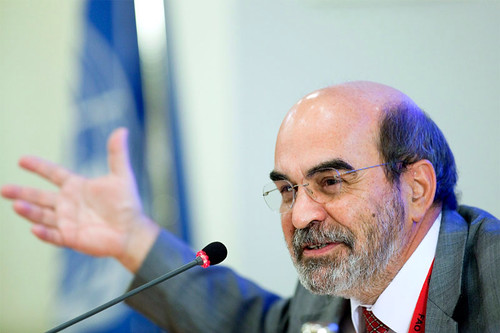
Food and Agriculture Organisation chief José Graziano da Silva demands high noon on land grabs that jeopardise food security.


José Graziano da Silva
Amid warnings that land deals are undermining food security, the head of the UN's Food and Agriculture Organisation (FAO) has compared "land grabs" in Africa to the "wild west", saying a "sheriff" is needed to restore the rule of law.

José Graziano da Silva, the FAO's director general, conceded it was not possible to stop large investors buying land, but said deals in poor countries needed to be brought under control.

"I don't see that it's possible to stop it. They are private investors," said Graziano da Silva in a telephone interview. "We do not have the tools and instruments to stop big companies buying land. Land acquisitions are a reality. We can't wish them away, but we have to find a proper way of limiting them. It appears to be like the wild west and we need a sheriff and law in place."

Large land deals have accelerated since the surge in food prices in 2007-08, prompting companies and sovereign wealth funds to take steps to guarantee food supplies. But, four to five years on, in Africa only 10-15% of land is actually being developed, claimed Graziano da Silva. Some of these investments have involved the loss of jobs, as labour intensive farming is replaced by mechanised farming or some degree of loss of tenure rights.

Oxfam said the global land rush is out of control and urged the World Bank to freeze its investments in large-scale land acquisitions to send a strong signal to global investors to stop.

Graziano da Silva, who was in charge of Brazil's widely praised "zerohunger" programme, expressed his frustration at the slow pace of creating a global governance structure to deal with land grabs, food security and similar problems. In 2008, the UN secretary general, Ban Ki-moon,created a high-level task force on food security on which Graziano Da Silva serves as vice-chairman.

In May, the committee on world food security (CFS), a UN-led group that includes governments, business and civil society, laid the groundwork for a governance structure for food by endorsing voluntary guidelines on the responsible governance of tenure of land, fisheries and forests.

Tenure has important implications for development, as it is difficult for poor and vulnerable people to overcome hunger and poverty when they have limited and insecure rights to land and other natural resources. But the guidelines took years to negotiate and lack an effective enforcement mechanism because they are voluntary. The CFS is an unwieldy group but has the virtue of inclusivity.

"It took two years to discuss the voluntary guidelines and now we face another two years of negotiations on the principles for responsible agricultural investments," said Graziano da Silva. "We need to speed up the decison-making process without losing the inclusivity model." More


Tuesday, August 28, 2012

Squeezing Africa dry: behind every land grab is a water grab

Food cannot be grown without water. In Africa, one in three people endure water scarcity and climate change will make things worse. Building on Africa’s highly sophisticated indigenous water management systems could help resolve this growing crisis, but these very systems are being destroyed by large-scale land grabs amidst claims that Africa's water is abundant, under-utilised and ready to be harnessed for export-oriented agriculture. GRAIN looks behind the current scramble for land in Africa to reveal a global struggle for what is increasingly seen as a commodity more precious than gold or oil: water.

The Alwero river in Ethiopia’s Gambela region provides both sustenance and identity for the indigenous Anuak people who have fished its waters and farmed its banks and surrounding lands for centuries. Some Anuak are pastoralists, but most are farmers who move to drier areas in the rainy season before returning to the river banks. This seasonal agricultural cycle helps nurture and maintain soil fertility. It also helps structure the culture around the collective repetition of traditional cultivation practices related to rainfall and rising rivers as each community looks after its own territory and the waters and farmlands within it.

One new plantation in Gambela, owned by Saudi-based billionaire Mohammed al-Amoudi, is irrigated with water diverted from the Alwero River. Thousands of people depend on Alwero's water for their survival and Al-Moudi's industrial irrigation plans could undermine their access to it. In April 2012, tensions over the project spilled over, when an armed group ambushed Al-Amoudi's Saudi Star Development Company operations, leaving five people dead.

The tensions in south western Ethiopia illustrate the central importance of access to water in the global land rush. Hidden behind the current scramble for land is a world-wide struggle for control over water. Those who have been buying up vast stretches of farmland in recent years, whether they are based in Addis Ababa, Dubai or London, understand that the access to water they gain, often included for free and without restriction, may well be worth more over the long-term, than the land deals themselves.

In recent years, Saudi Arabian companies have been acquiring millions of hectares of lands overseas to produce food to ship back home. Saudi Arabia does not lack land for food production. What’s missing in the Kingdom is water, and its companies are seeking it in countries like Ethiopia.

Indian companies like Bangalore-based Karuturi Global are doing the same. Aquifers across the sub-continent have been depleted by decades of unsustainable irrigation. The only way to feed India's growing population, the claim is made, is by sourcing food production overseas, where water is more available.

"The value is not in the land," says Neil Crowder of UK-based Chayton Capital which has been acquiring farmland in Zambia. "The real value is in water.” [1]

And companies like Chayton Capital think that Africa is the best place to find that water. The message repeated at farmland investor conferences around the globe is that water is abundant in Africa. It is said that Africa’s water resources are vastly under utilised, and ready to be harnessed for export oriented agriculture projects.

The reality is that a third of Africans already live in water-scarce environments and climate change is likely to increase these numbers significantly. Massive land deals could rob millions of people of their access to water and risk the depletion of the continent's most precious fresh water sources. More


Saturday, May 19, 2012

New UN-backed guidelines aim to protect rights to land, fisheries and forests

11 May 2012 – A United Nations-backed committee today endorsed a set of far-reaching global guidelines to help governments protect the rights of people, especially the poor, to own or access land, forests and fisheries.

“Giving poor and vulnerable people secure and equitable rights to access land and other natural resources is a key condition in the fight against hunger and poverty,”said the Director-General of the UN Food and Agriculture Organization (FAO), José Graziano da Silva.

“It is a historic breakthrough that countries have agreed on these first-ever global land tenure guidelines,” he added. “We now have a shared vision. It’s a starting point that will help improve the often dire situation of the hungry and poor.”

The new Voluntary Guidelines on the Responsible Governance of Tenure of Land, Fisheries and Forests in the Context of National Food Security was adopted by the Committee on World Food Security (CFS) – the leading global platform for discussions on food security issues – in Rome earlier on Friday.

Among the issues dealt with in the guidelines is the so-called ‘land-grabbing’ phenomenon, according to a news release issued by FAO. It recommends that safeguards be put in place to protect tenure rights of local people from risks that could arise from large-scale land acquisitions, and also to protect human rights, livelihoods, food security and the environment.

The guidelines also address a wide range of other issues such as recognition and protection of legitimate tenure rights, even under informal systems; best practices for registration and transfer of tenure rights; making sure that tenure administrative systems are accessible and affordable; managing expropriations and restitution of land to people who were forcibly evicted in the past; and the rights of indigenous communities. More


Saturday, May 12, 2012

Global land deal guidelines could pave way to world without hunger

New directives on access rights to land, fisheries and forests show constructive collaboration on food security is possible

The endorsement of voluntary guidelines to improve the way countries govern access rights to land, fisheries and forest resources by the Committee on World Food Security (CFS) on Friday marks a historic milestone not only for the way in which land tenure is managed, but also for international consensus-building.

The eradication of hunger depends in large measure on how people, communities and others have access to, and manage, land, fisheries and forests. Pressure on these resources, and on tenure arrangements, is increasing as new areas are cultivated to provide food for a rapidly growing population, urban areas expand, and as a result of environmental degradation, climate change and conflict. Rural landlessness is often the best predictor of poverty and hunger. Moreover, insecure tenure rights can lead to instability and conflict when competing users fight for control of these resources.

Weak governance of tenure hinders economic growth and the sustainable use of the environment. Small-scale farmers and traditional communities will not invest in improving their land, fisheries and forests if they could betaken away at any minute due to lack of recognition of customary rights, weak registration practices or corruption. In some countries, women, for example, despite doing all the farming, are denied legal recognition and protection of rights to their land plots.

The voluntary guidelines on the responsible governance of tenure of land, fisheries and forests in the context of national food security set foundations that are indispensable to resolve these issues. Responsiblegovernance of tenure enables sustainable social, economic and environmental development that can help eradicate food insecurity and poverty, and encourages responsible investment. More