Showing posts with label Africa. Show all posts

Wednesday, October 9, 2013

Namibia battles worst drought in decades

Opuwo, Namibia - The Tjikundi family sits around a small fire boiling a tin pot filled with water and maize - the only food that's available this day. A band of children crawl about, chewing on plastic tubing, and chase the visitors with animated curiosity.

The homestead is spectacular in its bareness. Soft, dry sand interrupted only by rocks and boulders fashion a molten envy for a lighter, brighter time. The livestock kraal is empty. So too are the granaries.

Scraggy roosters gawk and peck at the dust with fraught expectation while a domestic cat, at total odds with the environment, purrs and curls around people's ankles.

"This year is very bad because we have lost all our cattle," Mukaokondunga Tjikundi, in her early 20s, told Al Jazeera. "Sometimes the children go to bed with empty stomachs. Sometimes they just drink some water and go to sleep."

Hunger and hardship are recurring themes in Kunene, the northwest province in Namibia, considered the hardest-hit region by a drought many consider the worst in decades.

Almost one million people out of Namibia’s 2.3 million population face moderate to serious levels of food insecurity. The Namibian government in May estimated this year's harvest would yield 42 percent less than 2012.

In Kunene, two years of failed rains have devastated millet and maize plantations, dried up watering holes for livestock, and forced a population to search for precarious water supplies. Animals drink stagnant water in dry riverbeds, while some Namibians dig for water across the province and guard any source found with little wooden fences.

'Catastrophe'

"If people can resort to [drinking] dirty water, more are likely to suffer from water-borne diseases and the health situation is likely to deteriorate for animals and humans," Jack Ndemena, water and sanitation officer with the International Federation of Red Cross and Red Crescent Societies (IFRC), told Al Jazeera.

"There is nothing and if the rains don’t come, it is going to be a catastrophe."

In May, Namibian President Hifikepunye Pohamba was forced to declare a state of emergency and requested $33.7 million in international support to avert a crisis. Recognising the strain across the country, the IFRC and UNICEF launched appeals for $1.2m and $7.4m, respectively.

President Hifikepunye Pohamba has appealed for aid [EPA]

But little aid has arrived.

On September 2, Algeria donated $1m in food aid but the reaction from the rest of the international community has been poor.

Experts say Namibia’s status as a middle-income country hasn’t helped its appeals. Despite its wealth, the country suffers from high levels of income inequality. One-third of the population lives on less than $1 a day, and Namibia ranked 120 out of 187 countries on the 2012 UNDP Human Development Index.

Malnutrition is the second-most common cause of death recorded for children under five, even in non-drought years. And with the onset of this year’s drought, an estimated 109,000 children under five are at risk of acute malnutrition.

"Namibia still does not feed itself, and the middle-income classification comes from livestock, mining and fisheries industries - [this] does not provide an accurate situation on the ground," Cousins Gwanama, head of the Department of Crop Sciences at the University of Namibia in Windhoek, told Al Jazeera.

And it is unlikely the situation is about to get better.

'Confused'

With little rainfall predicted for later this year, farmers have described the drought as among the harshest in a generation. Granaries are empty as few crops were planted last year. With plateaus unsuitable for grazing, many pastoralist farmers have been forced to leave their homes and families and herd their livestock to higher ground with more vegetation, often involving a few days’ walk.

Accustomed to little rainfall, farmers have survived in semi-arid regions of Namibia for decades. But the total absence of precipition has left many perplexed and concerned, their farms lurching towards economic ruin.

"I thought we understood the environment, nature, but we are almost confused and don’t know what to expect," farmer Toivo Ruhozu told Al Jazeera.

"If the government doesn’t help, we will just have to face death." More


Monday, June 17, 2013

Let's Quit This Most Dangerous Game with Drought

On a recent visit to Niger, I met a woman in Batodi village with some very bold claims. Fifteen years ago, she and her fellow women would travel a day's journey to fetch water.

Today, they fetch it from a local well, having turned the situation around by rehabilitating their badly degraded land using traditional practices. In that period, the water level has “jumped up” by 14 meters. Moreover, the village had withstood the severe food and water challenges others in many parts of Niger suffered during recent droughts.

The researcher who had invited me backed the claims that the water table had risen from a depth of below 18 meters to about 4 meters below the ground. That was precisely why he had invited me to the field; to witness – contrary to claims otherwise – that it is possible to restore the health of even badly degraded land.

On 17 June, we unveil the winners of the 2013 Land for Life Award from 137 submissions worldwide. At the national level, Eritrea, Hungary, Kenya, Portugal and Thailand unveil their first Drylands Champions to recognize the local heroes making laudable steps in the fight against desertification and drought.

These kinds of stories, from the ground, inspire me to advocate unceasingly for policies in favor of investments to strengthen both sustainable land use practices and drought resilience. Grabbing more fragile lands to meet growing food demand is neither the answer nor is improving relief delivery the ultimate solution.

Rather, we must boldly move to a land-degradation neutral world where clearing new land is not an option, and, where it is inevitable, our collective target becomes offsetting such action by rehabilitating degraded land at the same pace and in the same ecosystem.

Political contestations over whether a land-degradation neutral world is possible should not prevail for lack of generalizable scientific claims to demonstrate it. Until massive investments in small pilot projects such as these by communities fail, their viability is not in question; the status quo is.

The achievements in Batodi, the submissions to the Land for Life Award and the work of the Drylands Champions affirm the claims of the recent report, A Dangerous Delay – The cost of late response to early warning in the 2011 drought in the Horn of Africa, that “the response to drought was too little too late, representing a systemic failure of the international system.”

Indeed, the international community has been here before; in the mid-1970s, with the Sahel drought disaster, in the mid-1980s with the drought and famine disaster in Ethiopia and, most recently, in 2011, with the tragedy in the Horn of Africa.

But the best evidence that we, as an international community, are playing the world's most dangerous game with drought lies in the fact that only one country in the world – Australia – has a comprehensive national drought policy.

There are more reasons for concern.

Drought affects more lives than any other disaster, yet unlike most disasters, it has a slow onset. And not only has every region in the world experienced more severe droughts in recent times, but droughts are set to increase in intensity, in spread and in frequency due to climate change.

About a billion people, among them people living in the arid and semi-arid parts of the world, have access to little or no renewable water resources. With the climate change scenarios, that estimate shoots to about half the world's population living in areas of high water stress by 2030.

Neither desertification nor droughts are fated, but the path to change is through a radical transformation in our view of the land and attitude towards drought.

Land is a strategic natural asset for our future sustainability. So let us give life to the aspiration of a land-degradation neutral world by setting a target date for its achievement as part of the Sustainable Development Goals to be agreed by 2015. We should follow in the steps of Africa. At its Summit last month it declared this part of its future agenda and called on the global community to do the same.


Tuesday, April 9, 2013

Hunger, Nutrition and Climate Justice Conference April 15 & 16

Hunger, Nutrition and Climate Justice Conference being hosted by the Mary Robinson Foundation - Climate Justice April 15-16.


The conference will "bring together key policy makers and global thought leaders with local people and practitioners facing the realities of rising food prices, failed crops, undernutrition and voicelessness. The objective will be to facilitate a respectful dialogue and learn from practical experience and robust evidence to inform a new approach to addressing hunger, nutrition and climate justice, in the context of the new international development agenda." Among the many notable participants are Olivier de Schutter, UN Special Rapporteur on the Right to Food and former U.S. Vice President, Al Gore.

Background documents, case studies and resources for the Hunger · Nutrition · Climate Justice Conference are now available below.

Conference Agenda

HNCJ Conference Provisional Agenda (PDF)

Conference Documents

HNCJ Conference Papers, including full case studies (PDF)

Case studies

For a full list of case studies click here

Attendance


Due to capacity limitations at Dublin Castle, attendance at the conference is by invitation only.

However, the conference will be livestreamed on www.eu2013.ie and participation via social media is encouraged (follow us on Twitter: #HNCJ) More


Tuesday, March 12, 2013

Land Grabs Spread Throughout Developing World

Food Justice advocates have always argued that trade agreements need to respect and promote human rights, not drive a process of globalization that privileges commercial interests and tramples on public interests. In my new paper on land grabs from the Institute for Agriculture and Trade Policy, that position is affirmed.

“Land grabs” are large-scale purchases or leases of agricultural or forested land on terms that violate the rights of the people who live on or near that land. The problem has commanded enormous public policy and media attention for the last few years. In our paper, IATP sets some context for the land grabs phenomenon. We focus on two forces that have contributed significantly to the problem:

Globalization, or the deregulation of trade and foreign investment laws, which has greatly eased cross-border capital flows; relaxed the limits on foreign land ownership; and, opened markets to agricultural imports.

The food price crisis of 2007-08, which highlighted how fragile food systems in many parts of the world have become, and which shattered the confidence of net-food importing countries in international markets as a source of food security.

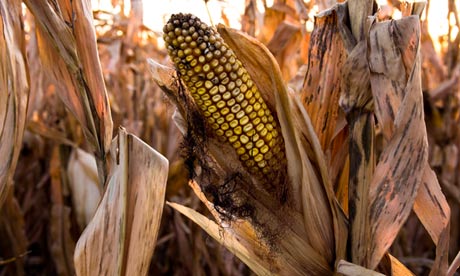
The situation is compounded by climate change and the resulting destabilization of weather patterns, which in turn has made agricultural production less predictable. Climate change has made domestic food supplies less certain and exports, too. In 2012, The United States, still a huge source of grains for international markets, lost 40 percent of a record large number of acres planted with corn to drought.

The sense of food insecurity has driven some of the richer net-food importers—countries such as Saudi Arabia and Kuwait—to invest in growing food abroad for import to their domestic markets. That is one driver of land grabs.

The sense that our food systems are fragile and that supplies are scarce, where for decades they have been abundant, is another driver—companies such as South Korea’s Daewoo are looking to source raw materials directly, rather than buying them on the market.

It’s not that investment in agriculture is a bad thing. Indeed, it’s sorely needed. But unless we have the conversation about what kind of investment, in what kind of agriculture, and in whose interests, then the investment does more harm than good.

Land grabs, as the label implies, have been overwhelmingly negative. They are associated with weak institutional capacity (and sometimes corruption) in the recipient country governments, as well as authoritarian governments in the investors’ home countries, making it hard to bring pressure there for better practices. The communities whose land is leased or bought are not adequately protected.

IATP proposes four linked policy shifts to create a more stable and transparent international food system:

1) Reformed trade rules that ensure export restrictions in times of crisis are subject to transparency and predictability requirements and that allow all countries policy space for food security policies;

2) Publicly-managed grain reserves to dampen the effects of supply shocks;

3) Readily accessible funding for the poorest food importers, which would be triggered automatically when prices increase sharply in international markets; and

4) The development of strong national and international laws to govern investment in land, respecting the principles and guidelines set out in the Voluntary Guidelines on Land Tenure. Tanzania’s recently announced limits on how much land foreign and domestic investors can lease is a hopeful example of a national government taking the initiative to get serious about regulation. More


Saturday, October 13, 2012

Food scarcity: the timebomb setting nation against nation

As the UN and Oxfam warn of the dangers ahead, expert analyst Lester Brown says time to solve the problem is running out


Brandon Hunnicutt has had a year to remember. The young Nebraskan from Hamilton County farms 2,600 acres of the High Plains with his father and brother. What looked certain in an almost perfect May to be a "phenomenal" harvest of maize and soy beans has turned into a near disaster.

A three-month heatwave and drought with temperatures often well over 38C burned up his crops. He lost a third and was saved only by pumping irrigation water from the aquifer below his farm.

"From 1 July to 1 October we had 4ins of rain and long stretches when we didn't have any. Folk in the east had nothing at all. They've been significantly hurt. We are left wondering whether the same will happen again," he says.

On the other side of the world, Mary Banda, who lives in Mphaka village near Nambuma in Malawi, has had a year during which she has barely been able to feed her children, one of whom has just gone to hospital with malnutrition.

Government health worker Patrick Kamzitu says: "We are seeing more hunger among children. The price of maize has doubled in the last year. Families used to have one or two meals a day; now they are finding it hard to have one."

Hunnicutt and Banda are linked by food. What she must pay for her maize is determined largely by how much farmers such as Brandon grow and export. This year the US maize harvest is down 15% and nearly 40% of what is left has gone to make vehicle fuel. The result is less food than usual on to the international market, high prices and people around the world suffering.

"This situation is not going to go away," says Lester Brown, an environmental analyst and president of the Earth Policy Institute in Washington. In a new book, Full Planet, Empty Plates, he predicts ever increasing food prices, leading to political instability, spreading hunger and, unless governments act, a catastrophic breakdown in food. "Food is the new oil and land is the new gold," he says. "We saw early signs of the food system unravelling in 2008 following an abrupt doubling of world grain prices. As they climbed, exporting countries [such as Russia] began restricting exports to keep their domestic prices down. In response, importing countries panicked and turned to buying or leasing land in other countries to produce food for themselves."

"The result is that a new geopolitics of food has emerged, where the competition for land and water is intensifying and each country is fending for itself."

Brown has been backed by an Oxfam report released last week. It calculated that the land sold or leased to richer countries and speculators in the last decade could have grown enough food to feed a billion people – almost exactly the number of malnourished people in the world today.Nearly 60% of global land deals in the last decade have been to grow crops that can be used for biofuels, says Oxfam. More


Tuesday, August 28, 2012

Squeezing Africa dry: behind every land grab is a water grab

Food cannot be grown without water. In Africa, one in three people endure water scarcity and climate change will make things worse. Building on Africa’s highly sophisticated indigenous water management systems could help resolve this growing crisis, but these very systems are being destroyed by large-scale land grabs amidst claims that Africa's water is abundant, under-utilised and ready to be harnessed for export-oriented agriculture. GRAIN looks behind the current scramble for land in Africa to reveal a global struggle for what is increasingly seen as a commodity more precious than gold or oil: water.

The Alwero river in Ethiopia’s Gambela region provides both sustenance and identity for the indigenous Anuak people who have fished its waters and farmed its banks and surrounding lands for centuries. Some Anuak are pastoralists, but most are farmers who move to drier areas in the rainy season before returning to the river banks. This seasonal agricultural cycle helps nurture and maintain soil fertility. It also helps structure the culture around the collective repetition of traditional cultivation practices related to rainfall and rising rivers as each community looks after its own territory and the waters and farmlands within it.

One new plantation in Gambela, owned by Saudi-based billionaire Mohammed al-Amoudi, is irrigated with water diverted from the Alwero River. Thousands of people depend on Alwero's water for their survival and Al-Moudi's industrial irrigation plans could undermine their access to it. In April 2012, tensions over the project spilled over, when an armed group ambushed Al-Amoudi's Saudi Star Development Company operations, leaving five people dead.

The tensions in south western Ethiopia illustrate the central importance of access to water in the global land rush. Hidden behind the current scramble for land is a world-wide struggle for control over water. Those who have been buying up vast stretches of farmland in recent years, whether they are based in Addis Ababa, Dubai or London, understand that the access to water they gain, often included for free and without restriction, may well be worth more over the long-term, than the land deals themselves.

In recent years, Saudi Arabian companies have been acquiring millions of hectares of lands overseas to produce food to ship back home. Saudi Arabia does not lack land for food production. What’s missing in the Kingdom is water, and its companies are seeking it in countries like Ethiopia.

Indian companies like Bangalore-based Karuturi Global are doing the same. Aquifers across the sub-continent have been depleted by decades of unsustainable irrigation. The only way to feed India's growing population, the claim is made, is by sourcing food production overseas, where water is more available.

"The value is not in the land," says Neil Crowder of UK-based Chayton Capital which has been acquiring farmland in Zambia. "The real value is in water.” [1]

And companies like Chayton Capital think that Africa is the best place to find that water. The message repeated at farmland investor conferences around the globe is that water is abundant in Africa. It is said that Africa’s water resources are vastly under utilised, and ready to be harnessed for export oriented agriculture projects.

The reality is that a third of Africans already live in water-scarce environments and climate change is likely to increase these numbers significantly. Massive land deals could rob millions of people of their access to water and risk the depletion of the continent's most precious fresh water sources. More


Tuesday, August 14, 2012

Africa’s Last Famine

WASHINGTON, DC – Last year, the international community recognized one of the worst humanitarian tragedies of recent times unfolding in the Horn of Africa, and moved in to ameliorate the widespread famine there. Now, poor rains, crop shortages, and continuing conflict could cause millions to be plunged back into life-threatening levels of hunger and malnutrition.

Emergency assistance is crucial in this fragile time; but it is not enough. Only if the agricultural sector’s fundamental inadequacies are addressed can the region truly escape famine’s blight.

Africa is endowed with 60% of the world’s unused arable land and millions of dedicated farmers. They simply need the tools, infrastructure, and competence to unlock the continent’s tremendous agricultural potential. There is no reason – and no excuse – to leave the survival of millions to unpredictable weather conditions. Rather, countries must take control by drastically improving efficiency and productivity.

To be sure, progress has been made. Some African governments have reduced regulatory barriers to private-sector investment in agriculture. And some are implementing risk-management and hedging tools to shield farmers from drought and flood, and poor consumers from the food-price volatility that such disasters cause. For example, the Global Index Insurance Facility insures Kenyan farmers against drought or excessive rainfall.

Such initiatives foster the flow of resources into agriculture – both for the agribusinesses needed to feed Africa’s growing cities, and for smallholders who need better seeds, fertilizer, and market roads. Although more developed regions have been taking such measures, they are not yet standard practice in Africa.

The continent’s agricultural sector is further hindered by low skills, a dearth of innovation, weak infrastructure, little funding, and lack of access to land, land titles, and lender security. But, given the right tools, all of these problems are solvable.

For example, in order to finance reform, local banks need incentives to expand credit. That could mean access to specialized credit bureaus and rating agencies, risk-sharing facilities targeting smallholders, and advisory services to provide capacity-building and education.

These banks also need direct support. For example, the International Finance Corporation is investing $25 million in Zambia National Commercial Bank to increase access to finance for small-scale entrepreneurs and rural agribusiness companies, which account for a significant share of Zambia’s economic output.

Moreover, innovative financing techniques – such as structured trade finance, warehouse receipt finance, and supplier finance – are already in place or being developed. Under the Global Warehouse Receipt Program, for example, farmers may use produce stored in depositories as collateral for loans.

Smallholder farm-mechanization models are also needed to improve efficiency and increase yields. Farmers could be grouped together to pool their production and negotiate a favorable offtake agreement to monetize future sales, then use the receipts to lease equipment, such as tractors.

Water is another major constraint on food production in some regions. Most affected countries are working to increase supply by developing new sources of ground and surface water, using wastewater from nearby urban areas, harvesting rainwater, or reusing agricultural drainage. Meanwhile, some countries are focusing on reducing demand, through improved management and innovative agricultural techniques, such as precision and drip irrigation. More


Tuesday, March 20, 2012

Food Security in a Climate-Altered Future (Part 1)

“Hotspots” Suggest Food Insecurity More Than a Supply Problem

Small talk about the weather with my Malawian taxi driver became serious very quickly. “We no longer know when the rains are coming,” he said as we bumped along the road toward the Lilongwe airport last November. “It is very difficult, because we don’t know when to plant.”

These days, he is grateful for his job driving a taxi. His extended family and friends are among the 85 percent of Malawians employed in agriculture, much of which is small-holder, rain-fed subsistence farming. Weather-related farming challenges contribute to ongoing food insecurity in Malawi, where one in five children is undernourished.

His observations of the recent changes in climate match forecasts for the region: in East Africa, climate change is expected to reduce the productivity of maize – Malawi’s main subsistence crop – by more than 20 percent by 2030, according to a recent analysis by Oxfam International.

I looked out the window at dusty fields and tried to imagine what Malawi might look like in 2030. For one thing, it will be more crowded. A lot more crowded. According to UN population projections, by 2030, Malawi’s population will have grown from about 15 million today to somewhere between 26.9 and 28.4 million. With climate change dampening agricultural productivity and population growth increasing food demand, how will Malawians – many of whom don’t have enough to eat now – have enough to eat in the future?

It gets quiet in the taxi as the driver and I both ponder this question. Malawi is not alone in being a climate-vulnerable country with a rapidly growing population dependent on rain-fed agriculture. Population Action International’s Mapping Population and Climate Change tool shows us that many “hotspot” countries – scattered across Latin America, Africa, and Asia – face the triple challenge of low climate change resilience, projected decline in agricultural productivity, and rapid population growth.

Agricultural trade, government safety net programs, and foreign assistance will no doubt continue to play an important role in the quest for food security in Malawi and other “hotspot” countries in the future. And climate change adaptation projects will, hopefully, reshape agricultural practices and technologies in ways that can boost yields and enable crops to better withstand temperature and precipitation fluctuations.

These interventions will be critical in addressing the supply side of future food security challenges. But what about growing demand?

Malthus Revisited?

Juxtaposing population growth with food production does, of course, bring us back to Thomas Robert Malthus’ original (and by now somewhat infamous) dire warning: that population growth would eventually outrun food supply. But seeing the scale of the challenges in Malawi firsthand, I must admit that my inner Malthus sat up and took notice.

It is true that technological advances have enabled astounding growth in agricultural yields that have enabled us to feed the world in ways the doom-filled Malthus could never have imagined in the early 19th century. But it is also true that the agricultural productivity gains that helped us keep pace with population growth for so long are beginning to slow: According to the U.S. Department of Agriculture, aggregate agricultural yields averaged 2.0 percent growth annually between 1970 and 1990, but that growth in yields declined to 1.1 percent between 1990 and 2007, and is projected to decline to less than 1.0 percent in the years to come. More


Thursday, March 8, 2012

Permaculture Resiliency Project with the San Bushmen in the Kalahari

In a land of contrast, mystery and years of imperialism, a small village of over 300 people on the edge of the Kalahari in Namibia germinated a new permaculture resiliency project in January of 2012. In talking with the headman of the village, he shared that their people, the San Bushmen, have lived in harmony with the land as hunter gatherers for eons. They are often cited as the first peoples of Africa and very likely all of humanity may have descended from their ranks many millennia ago.

The village elder sadly shared that colonialism has destroyed the San migratory way of life — a hunter gatherer tradition that was sustainable for thousands of years. He told us that they were no longer allowed to roam freely and trophy hunters destroyed the vast herds of game that formed their principal supply of food. Both Black and White farmers alike built up huge herds of cattle that destroyed the ecology of the Kalahari and subsequently the foods that had been their staple diet. They soon found they had to work for the farmers to be able to feed their families and hence a cycle of poverty and separation from their cultural roots ensued.

Although rarely recognized in the histories of the west, a similar unfolding of separation from our ancestral sustainable way of living has been a part of all our stories at some point in our history. Somewhere deep in our bones we can truly empathize with the plight of these people. The village of Vergenoeg came to be out of the displacement of the San and that of the Damara peoples who eventually had to settle to survive. You can see and feel the the years of gathered grief that are evident in the very fabric of the village in both prominent and subtle ways. Yet, there are vast cultural roots that keep the people cohesive in their plight for a sustainable future.

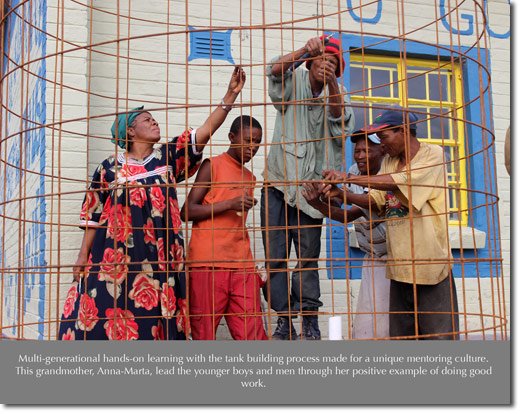
Seven years ago an inspired Canadian named Kimberly Cornish visited the village, fell in love with the land and the people, and felt that she could eventually facilitate some positive and lasting projects to help the people remember their gifts and build their capacity and resilience — and that of the land. Ever since then she has been building her skill set and experiences to prepare her for this vision that has led up to this project. More


Tuesday, February 21, 2012

Somalia's Rich Maritime Resources Being Plundered, Report Says

UNITED NATIONS, Feb 21, 2012 (IPS) - The international community has failed to grapple with the real underlying political and economic issues facing the troubled East African nation of Somalia, which has been surviving without an effective government for over two decades, according to a new study released here.

With the country's 3,300-km coastline virtually unprotected, industrial fishing vessels from Europe and Asia have entered the area in large numbers and are plundering Somalia's rich maritime resources.

With the country's 3,300-km coastline virtually unprotected, industrial fishing vessels from Europe and Asia have entered the area in large numbers and are plundering Somalia's rich maritime resources. Authored by Suzanne Dershowitz and James Paul, the report was released ahead of a high-level international conference on Somalia scheduled to take place in London Feb. 23. More


Wednesday, December 21, 2011

Droughts could push parts of Africa back into famine

Drought and erratic rains could lead to further food scarcities in Africa warns the United Nations World Food Program (WFP). The WFP singles out South Sudan, the world's newest nation, and Niger as nations of particular concern. Earlier this year famine killed scores of people, including an estimated 30,000 children, in Somalia. In South Sudan drought and ongoing conflict threaten food supplies for 2.7 million people.

"A gathering storm of hunger is approaching South Sudan, caused by crop failure and market disruption," said WFP director in South Sudan, Chris Nikoi. "Food prices have already doubled or tripled in some areas, leaving hundreds of thousands of children vulnerable to malnutrition at a key developmental stage of their young lives." 

The WFP states it is upping operations to feed more people in the new nation in 2012, but warns that lack of infrastructure and land mines makes travel difficult. It says it needs emergency funds of nearly $100 million for food services in South Sudan for the first quarter of 2012.

For further information: http://news.mongabay.com/2011/1218-hance_africa_food.html#ixzz1h06d7mZS

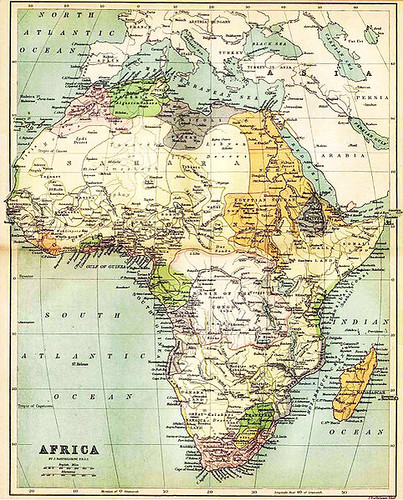
Photo: http://www.esacademic.com/pictures/eswiki/77/Map_sahel.jpg