Showing posts with label grab. Show all posts

Tuesday, April 9, 2013

Hunger, Nutrition and Climate Justice Conference April 15 & 16

Hunger, Nutrition and Climate Justice Conference being hosted by the Mary Robinson Foundation - Climate Justice April 15-16.


The conference will "bring together key policy makers and global thought leaders with local people and practitioners facing the realities of rising food prices, failed crops, undernutrition and voicelessness. The objective will be to facilitate a respectful dialogue and learn from practical experience and robust evidence to inform a new approach to addressing hunger, nutrition and climate justice, in the context of the new international development agenda." Among the many notable participants are Olivier de Schutter, UN Special Rapporteur on the Right to Food and former U.S. Vice President, Al Gore.

Background documents, case studies and resources for the Hunger · Nutrition · Climate Justice Conference are now available below.

Conference Agenda

HNCJ Conference Provisional Agenda (PDF)

Conference Documents

HNCJ Conference Papers, including full case studies (PDF)

Case studies

For a full list of case studies click here

Attendance


Due to capacity limitations at Dublin Castle, attendance at the conference is by invitation only.

However, the conference will be livestreamed on www.eu2013.ie and participation via social media is encouraged (follow us on Twitter: #HNCJ) More


Tuesday, March 19, 2013

Undercover sting exposes Malaysia land-grab

Allegations of corruption get louder following secret tapes showing plunder of resource-rich Sarawak province.

Mountains of Borneo Island

Long Napir, Malaysia - Plantations and logging are ravaging Malaysia's majestic Borneo region and indigenous people who have lived for centuries here say they are increasingly being uprooted from their once-pristine lands.

But as the timber and palm oil companies swarm over the rugged landscape of resplendent rivers and ancient rainforests, villagers in Long Napir in the country's biggest state Sarawak have vowed to thwart any further land-grabs.

The village is a settlement of longhouses, the traditional communal housing favoured by indigenous people in eastern Malaysia's Borneo island.

Under the Sarawak Land Law, indigenous people have rights over areas as long as they can prove they have lived in or used the lands prior to January 1, 1958.

"We have no land to farm, our rivers have become muddy, there's hardly any fish left anymore."

- Tamin Sepuluh Ribu, villager

But the surrounding ancient rainforests that are so essential to their traditional way of life is under threat because of logging and plantation companies. Over the past 30 years, Sarawak - one of the richest Malaysian states - has become one of the largest exporters of tropical timber.

Despite its wealth, profits have failed to trickle down, and the people here are some of the poorest in the country.

Long Napir villagers lay the blame for their plight squarely on one man: the state's powerful chief minister, Abdul Mahmud Taib, who is in charge of all land classification and the allocation of lucrative forestry and plantation licenses.

"He lives, the rest of us suffer," Tamin Sepuluh Ribu, a former village headman, told Al Jazeera. "We have no land to farm, our rivers have become muddy, there's hardly any fish left anymore."

'Coterie of cronies'

Global Witness, a non-governmental organisation working against environmental exploitation, has investigated and exposed the situation in remote eastern Malaysia.

An undercover Global Witness investigator posing as an investor was offered several opportunities to purchase land in Sarawak by company officials linked to Chief Minister Taib. In each instance, the land in question was occupied by indigenous communities, who have valid claims to ownership rights under Malaysian law.

Global Witness said the indigenous areas were being sold by companies with close personal or political ties to the chief minister.

Taib has held the post since 1981, and has been repeatedly accused of corruption during his nearly 32-year rule.

The US Embassy in Kuala Lumpur noted in one cable released by WikiLeaks: "Chief Minister Taib Mahmud … doles out timber-cutting permits while patrolling the underdeveloped state using 14 helicopters, and his family's companies control much of the economy."

The American cable added that, "All major contracts and a significant portion of land to be converted to palm oil plantations [including on indigenous 'customary land rights' that the state government has refused to recognize] are given to these three companies."

People in Sarawak are "fed up" with Taib's administration, "seen as only enriching his family and a small coterie of cronies", it said.

A Penan girl deep in the Borneo rainforests [EPA]

Under investigation

Global Witness released a November 2012 report titled, "In the future, there will be no forests."

"Taib's powerful executive position and personal responsibility for the issuance of lucrative logging and plantation licences has enabled him to systematically extract 'unofficial payments' from the state's timber tycoons for the enrichment of himself and his family," the report said.

Taib, meanwhile, denied the corruption allegations as "wholly untrue and malicious", said the report.

In 2011, the Malaysian Anti-Corruption Commission launched an official investigation into Taib, which continues at present.

In secretly taped negotiations provided to Al Jazeera, the Global Witness investigator discussed buying land with company shareholders Fatimah Abdul Rahman and Norlia Abdul Rahman - Taib's first cousins. Fatimah admitted the parcel of land under discussion had been transferred to them by Chief Minister Taib.

"Yeah, he's the one who gave us the land. He's my cousin," Fatimah said, laughing.

In 2011, Taib gave his cousins 5,000 hectares of land for about $300,000 dollars, according to leaked land registry documents. Having secured agriculture and timber licences, they were trying to sell it a year later for more than $16mn.

Later, discussing the ease of receiving a forestry license, Fatimah told the Global Witness investigator: "The Land and Survey Department, they are the ones that issue this licence. Of course, this is from the CM's [Chief Minister's] directive, but I can speak to the CM very easily." More


Tuesday, March 12, 2013

Land Grabs Spread Throughout Developing World

Food Justice advocates have always argued that trade agreements need to respect and promote human rights, not drive a process of globalization that privileges commercial interests and tramples on public interests. In my new paper on land grabs from the Institute for Agriculture and Trade Policy, that position is affirmed.

“Land grabs” are large-scale purchases or leases of agricultural or forested land on terms that violate the rights of the people who live on or near that land. The problem has commanded enormous public policy and media attention for the last few years. In our paper, IATP sets some context for the land grabs phenomenon. We focus on two forces that have contributed significantly to the problem:

Globalization, or the deregulation of trade and foreign investment laws, which has greatly eased cross-border capital flows; relaxed the limits on foreign land ownership; and, opened markets to agricultural imports.

The food price crisis of 2007-08, which highlighted how fragile food systems in many parts of the world have become, and which shattered the confidence of net-food importing countries in international markets as a source of food security.

The situation is compounded by climate change and the resulting destabilization of weather patterns, which in turn has made agricultural production less predictable. Climate change has made domestic food supplies less certain and exports, too. In 2012, The United States, still a huge source of grains for international markets, lost 40 percent of a record large number of acres planted with corn to drought.

The sense of food insecurity has driven some of the richer net-food importers—countries such as Saudi Arabia and Kuwait—to invest in growing food abroad for import to their domestic markets. That is one driver of land grabs.

The sense that our food systems are fragile and that supplies are scarce, where for decades they have been abundant, is another driver—companies such as South Korea’s Daewoo are looking to source raw materials directly, rather than buying them on the market.

It’s not that investment in agriculture is a bad thing. Indeed, it’s sorely needed. But unless we have the conversation about what kind of investment, in what kind of agriculture, and in whose interests, then the investment does more harm than good.

Land grabs, as the label implies, have been overwhelmingly negative. They are associated with weak institutional capacity (and sometimes corruption) in the recipient country governments, as well as authoritarian governments in the investors’ home countries, making it hard to bring pressure there for better practices. The communities whose land is leased or bought are not adequately protected.

IATP proposes four linked policy shifts to create a more stable and transparent international food system:

1) Reformed trade rules that ensure export restrictions in times of crisis are subject to transparency and predictability requirements and that allow all countries policy space for food security policies;

2) Publicly-managed grain reserves to dampen the effects of supply shocks;

3) Readily accessible funding for the poorest food importers, which would be triggered automatically when prices increase sharply in international markets; and

4) The development of strong national and international laws to govern investment in land, respecting the principles and guidelines set out in the Voluntary Guidelines on Land Tenure. Tanzania’s recently announced limits on how much land foreign and domestic investors can lease is a hopeful example of a national government taking the initiative to get serious about regulation. More


Thursday, December 20, 2012

Curbing Tanzania’s “Land Grabbing Race”

DAR ES SALAAM, Dec 19 2012 (IPS) – From January 2013, Tanzania will start restricting the size of land that single large-scale foreign and local investors can “lease” for agricultural use. The decision follows both local and international criticism that major investors are grabbing large chunks of land here, often displacing small-scale farmers and local communities.

The Permanent Secretary in the Prime Minister’s Office Peniel Lyimo confirmed that the government would limit the amount of land leased to investors in this East African nation. Previously, there were no limits.

“For a large-scale investor who wants to invest in sugar, the ceiling has been put at 10,000 hectares. (The limit for) rice is 5,000 hectares. The ceiling for sugar is significantly higher due to the fact that it may also produce electric power,” Lyimo told IPS. Sugarcane fibre is used in the generation of electricity.

According to official documents, seen by IPS, from the Tanzania Investment Centre, a government agency set up to promote and facilitate investment: “Even within a seven-year period, an investor would not be able to use more than 10,000 hectares…”

The move will come as a relief to land rights organisations that have continually called for the government to curb the land grabs here. [related_articles]

In 2008 the Tanzanian government launched the Kilimo Kwanza (Agriculture First) initiative in order to increase private sector investments in agriculture.

And when the World Economic Forum took place in Dar es Salaam in 2010, the Southern Agricultural Growth Corridor of Tanzania (SAGCOT), a multi-stakeholder partnership to rapidly develop the country’s agricultural potential, was formed and the government began to invite foreign companies to invest in crops like sugarcane, maize, rice and cassava.

However, civil society organisations like the Tanzanian NGO Land Rights Research and Resources Institute (LARRRI) and the Oakland Institute, an independent policy think tank in the United States, called on the government to review its investment policy to limit the amount of land given to foreign investors.

“Giving tens of thousands of hectares to large-scale investors was hurting small-scale farmers,” said LARRRI executive director Yefred Myenzi.

To date, he told IPS, the government has given 80,000 hectares of land to large-scale investors.

“Land conflicts pitting poor villagers against powerful investors now number more than 1,000 reported incidents. On average, there are five land disputes daily in the country and three of these involve powerful investors,” said Myenzi.

In Tanzania’s northern Loliondo district, which is known for its wildlife, much of the land has been leased out to international hunting concessions, which has resulted in the large-scale eviction of the local population – although the government refutes this. A major U.S. energy company, AgriSol Energy, has also been accused of engaging in land grabs in Tanzania that would displace more than 160,000 Burundian refugees, according to a report by the Oakland Institute. The report states that AgriSol is benefiting from the forcible eviction of the refugees, many of whom are subsistence farmers, and leasing the land — as much as 800,000 acres — from the Tanzanian government for 25 cents per acre.

Myenzi said that of the 1,825 general land disputes reported in 2011, 1,095 involved powerful investors. More


Wednesday, December 19, 2012

Grabbing at Solutions: Water for the Hungry First

This piece is part of Water Grabbers: A Global Rush on Freshwater, a special National Geographic News series on how grabbing land—and water—from poor people, desperate governments, and future generations threatens global food security, environmental sustainability, and local cultures


A spontaneous, largely under-the-radar blue revolution is gaining steam in sub-Saharan Africa and has the potential to boost food security and incomes for tens of millions of the region’s poorest inhabitants.


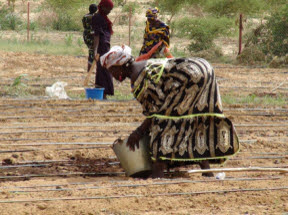
Small-scale irrigation techniques with simple buckets, affordable pumps, drip lines, and other equipment are enabling farm families to weather dry seasons, raise yields, diversify their crops, and lift themselves out of poverty.

But unless African governments and foreign interests lend support to these farmer-driven initiatives, rather than undermine them through land and water deals that benefit large-scale, commercial schemes, the best opportunity in decades for societal advancement in the region will be squandered.


Worldwide, as the limits of available water become ever more apparent, the rush is on to acquire more of the precious liquid before there’s none to be had. Government and business interests from China, India, Saudi Arabia, the United States, and other countries that have depleted many of their own water sources are now acquiring access to the land and water of other nations – especially poor ones – to rake in profits and secure food supplies.


The 2008 spike in global food prices unleashed a frenzy of land and water deals that threaten not only the livelihoods of millions but also the geopolitical security of nations.


Nowhere is this more evident than in Africa, especially poor countries south of the Sahara. Business and government interests are targeting Ethiopia, Mali, Sudan, and other underdeveloped nations to capitalize on their “underutilized” farmlands and waters.


Although pitched as investments to advance economic development, many of these deals are not only failing to deliver promised benefits, they are destroying the livelihoods of traditional farmers, herders, and fisherfolk.


Today, hunger is endemic in sub-Saharan Africa. The 2012 Global Hunger Index ranks forty-two of the forty-five countries in the region for which data are available at “serious” or “alarming” levels. Nearly one in four children are underweight. More