Wednesday, May 22, 2013

The Goodman Affair: Monsanto Targets the Heart of Science

Richard Smith, former editor of the British Medical Journal, has jested that instead of scientific peer review, its rival The Lancet had a system of throwing a pile of papers down the stairs and publishing those that reached the bottom. On another occasion, Smith was challenged to publish an issue of theBMJ exclusively comprising papers that had failed peer review and see if anybody noticed. He replied, “How do you know I haven’t already done it?”
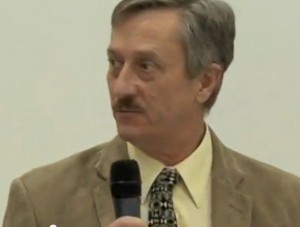
Richard E Goodman

As Smith’s stories show, journal editors have a lot of power in science – power that provides opportunities for abuse. The life science industry knows this, and has increasingly moved to influence and control science publishing.

The strategy, often with the willing cooperation of publishers, is effective and sometimes blatant. In 2009, the scientific publishing giant Elsevier was found to have invented an entire medical journal, complete with editorial board, in order to publish papers promoting the products of the pharmaceutical manufacturer Merck. Merck provided the papers, Elsevier published them, and doctors read them, unaware that the Australasian Journal of Bone and Joint Medicine was simply a stuffed dummy.

Fast forward to September 2012, when the scientific journal Food and Chemical Toxicology (FCT) published a study that caused an international storm (Séralini, et al. 2012). The study, led by Prof Gilles-Eric Séralini of the University of Caen, France, suggested a Monsanto genetically modified (GM) maize, and the Roundup herbicide it is grown with, pose serious health risks. The two-year feeding study found that rats fed both suffered severe organ damage and increased rates of tumors and premature death. Both the herbicide (Roundup) and the GM maize are Monsanto products. Corinne Lepage, France’s former environment minister, called the study “a bomb”.

Subsequently, an orchestrated campaign was launched to discredit the study in the media and persuade the journal to retract it. Many of those who wrote letters to FCT (which is published by Elsevier) had conflicts of interest with the GM industry and its lobby groups, though these were not publicly disclosed.

The journal did not retract the study. But just a few months later, in early 2013 the FCT editorial board acquired a new “Associate Editor for biotechnology”, Richard E. Goodman. This was a new position, seemingly established especially for Goodman in the wake of the “Séralini affair”.

Richard E. Goodman is professor at the Food Allergy Research and Resource Program, University of Nebraska. But he is also a former Monsanto employee, who worked for the company between 1997 and 2004. While at Monsanto he assessed the allergenicity of the company’s GM crops and published papers on its behalf on allergenicity and safety issues relating to GM food (Goodman and Leach 2004).

Goodman had no documented connection to the journal until February 2013. His fast-tracked appointment, directly onto the upper editorial board raises urgent questions. Does Monsanto now effectively decide which papers on biotechnology are published in FCT? And is this part of an attempt by Monsanto and the life science industry to seize control of science?

To equate one journal with “science” may seem like an exaggeration. But peer-reviewed publication, in the minds of most scientists, is science. Once a paper is published in an academic journal it enters the canon and stands with the discovery of plate tectonics or the structure of DNA. All other research, no matter how groundbreaking or true, is irrelevant. As a scientist once scathingly said of the “commercially confidential” industry safety data that underpin approvals of chemicals and GM foods, “If it isn’t published, it doesn’t exist.”

Goodman’s ILSI links

The industry affiliations of FCT’s new gatekeeper for biotechnology are not restricted to having worked directly for Monsanto. Goodman has an active and ongoing involvement with the International Life Sciences Institute (ILSI). ILSI is funded by the multinational GM and agrochemical companies, including Monsanto. It develops industry-friendly risk assessment methods for GM foods and chemical food contaminants and inserts them into government regulations.

ILSI describes itself as a public interest non-profit but its infiltration of regulatory agencies and influence on risk assessment policy has become highly controversial in North America and Europe. In 2005 US-based non-profits and trade unions wrote to the World Health Organization (WHO) protesting against ILSI’s influence on international health standards protecting food and water supplies. As a result, the WHO barred ILSI from taking part in WHO activities setting safety standards, because of its funding sources. And in Europe in 2012, Diana Banati, then head of the management board at the European Food Safety Authority (EFSA), had to resign over her undisclosed long-standing involvement with ILSI (Robinson et al. 2013).

Goodman’s appointment to FCT is surprising also for the fact that the journal already has expertise in GM food safety. Of the four senior editors, José L. Domingo is a professor of toxicology and environmental health and author of two comprehensive reviews of GM food safety studies (Domingo 2007; Domingo and Bordonaba 2011). Both reviews expressed skepticism of the thesis that GMOs are safe. Consequently, it is far from clear why FCT needs an “associate editor for biotechnology”, but it is clear why Monsanto would have an interest in ensuring that the “Séralini affair” is never repeated.

Editing the scientific record: The case of Paul Christou

FCT is not the only academic journal that appears to have been captured by commercial interests. After the initial campaign failed to get FCT to retract the Séralini study, the journal Transgenic Researchpublished a heavy-handed critique of the study and of the researchers themselves (Arjo et al., 2013). The lead author of that critique was Paul Christou.

Christou and co-authors castigated the editor of FCT for publishing the study, calling it “a clear and egregious breach of the standards of scientific publishing”. They insisted that the journal editor retract the study “based on its clearly flawed data, its breaches of ethical standards, and the strong evidence for scientific misconduct and abuse of the peer-review process”. “Even a full retraction of the Séralini article” wrote Christou, “will not cleanse the Internet of the inflammatory images of tumorous rats.”

The same writers further implied that the Séralini study was “fraudulent”, that the researchers failed to analyse the data objectively, and that the treatment of the experimental animals was inhumane.

This is not the first time Christou has attacked scientific findings that have raised doubts about GM crops. In 2001 Ignacio Chapela and David Quist of the University of California, Berkeley, reported in the journal Nature that indigenous Mexican maize varieties had become contaminated with GM genes (Quist and Chapela, 2001). This issue was, and remains, highly controversial since Mexico is the genetic centre of origin for maize. In an exact parallel with the Séralini study, an internet campaign was waged against Chapela and Quist demanding that the journal retract the study. Then Christou, just as he was later to do with the Séralini study, attacked Chapela and Quist’s paper in an article in Transgenic Research. The title said it all: “No credible scientific evidence is presented to support claims that transgenic DNA was introgressed into traditional maize landraces in Oaxaca, Mexico” (Christou, 2002).

Responding to the campaign, Nature editor Philip Campbell asked Chapela and Quist for more data, which they provided, and arranged another round of peer review. Only one reviewer in the final group of three supported retraction, and no one had presented any data or analysis that contradicted Chapela and Quist’s main finding. Nevertheless, Nature asserted, “The evidence available is not sufficient to justify the publication of the original paper”. Some subsequent investigations, testing different samples, reported finding GM genes in native landraces of Mexican corn (Pineyro-Nelson et al. 2009), while others did not (Ortiz-Garcia et al. 2005).

Paul Christou, in contrast, probably did not have much trouble getting either of his critiques published inTransgenic Research. He is the journal’s editor-in-chief. And, like Goodman, Christou is connected to Monsanto. Monsanto bought the GM seed company Agracetus (Christou’s former employer) and Monsanto now holds patents for the production of GM crops on which Christou is named as the inventor. It is normal practice to declare inventor status on patents as a competing interest in scientific articles, but Christou did not disclose either conflict of interest – his editorship of the journal or his patent inventor status – in his critique of the Séralini study.

The Ermakova affair: Preemptive editing of the scientific record

Not only can journal editors prevent the publication of research showing problems with GM crops in their own journals – they can effectively prevent publication elsewhere. In 2007, the leading academic journal Nature Biotechnology featured an extraordinary attack on the work of Russian scientist, Irina Ermakova (Marshall, 2007). Her laboratory research had found decreased weight gain, increased mortality, and decreased fertility in rats fed GM Roundup-tolerant soy over several generations (Ermakova, 2006; Ermakova, 2009). More


Monday, May 20, 2013

If you can't trust your food should you trust your government?

A Grassroots Movement called March Against Monsanto is Going Global – Taking Back Control of Food Production Starting May 25th 2013

One of the most important issues facing people all over the world is Food – the production, safety and availability of Food. Gone are the days when one could purchase either seeds or food without the strong possibility that agenetic modification was made to the seeds or food they purchased. Seed Cultivation is increasingly falling under the corporate ownership of Monsanto – the details of which will astound the reader.

What is happening globally is a complete takeover of seed cultivation and food production, threatening the very existence of what was once genetically pure seed stock and food, having been grown and selected in a natural process of allowing Nature to modify the plant or organism and then selecting the best to save, distribute and grow.

Due to the disastrous experimentation and corporate legislation that has occurred over the last few decades, the threat to humanities ability to consume “Natural Food” also referred to as Heirloom Seed, is under such threat, that a grassroots movement is now taking shape called March Against Monsanto which begins May 25th, 2013 and is taking on a global dimension. More


Thursday, May 2, 2013

United Natures

United Natures is a documentary movie on the Universal Declaration of the Rights of Mother Earth, permaculture, philosophy, spirituality and a neo-indigenous future for humanity.

103 minutes. Release June 1st 2013.


Featuring a stellar cast of top international thinkers and activists including Starhawk, Dr. Vandana Shiva, David Holmgren (co-originator of permaculture), Father Bob Maguire, Polly Higgins (ecocide), Rosa Maria Ruiz, John Seed, Cormac Cullinan and many others.


Supported by Permaculture Magazine


International Permaculture Day May 5th 2013

Wednesday, May 1, 2013

Permaculture Design Course for International Development & Social Entrepreneurship

June 24 – July 7, 2013

Convened by Quail Springs Permaculture and True Nature Design

Lead Instructors: Warren Brush with Quail Springs and True Nature Design and Joseph Lentunyoi of the Maasai people, Permaculture Research Institute of Kenya and Nyumbani Village

Guest Instructors include:
Jeremiah Kidd, Global Permaculture Designer and Educator
Cathe’ Fish , Founder of Practical Permaculture Research Institute
Lyn Hebenstreit, Co-Founder of Global Resource Alliance
Tara Blasco, Co-Founder of Global Resource Alliance
Loren Luyendyk, Co-Founder of Surfer’s Without Borders
Alissa Sears, Global Betterment Director at Christie Communications
Jeannette Acosta, Indigenous Permaculture Designer and Educator
Daniel Parra-Hensel, Permaculture Designer and Educator
Brenton Kelly, Principle Farm Educator for Quail Springs Permaculture
Tom Cole, Principle Agricultural Advisor with Save the Children

“My learning journey at Quail Springs helped to nurture my presence of mind to be a better and more active listener – a vital trait for the international development professional. The coursework was incredibly pertinent to my work in Uganda and without a doubt made me more aware, more compassionate, and more focused in my role as a project manager and human being.” - Grant Buhr, Project Focus, Quail Springs’ PDC graduate

Permaculture is an integrated design system that provides a framework for consciously designed landscapes that provide diversity, stability, and resilience for individuals and communities. Permaculture is in 160 countries with many thousands of grassroots projects on-the-ground.

This course will assist you and your organization with integrating into your projects:

  • Increased Food Security
  • Community-Based Development
  • Waste Cycling
  • Sustainability Education
  • Clean Water and Drought Proofing
  • Health and Nutrition
  • Sustainable Vocations & Enterprise

Topics include: Integrated Design, Composting, Water Harvesting, Compost Toilets, Waste Cycling, Earthworks, Rocket Stoves, Design Priorities, Ecological Building, Aquaculture, Bio-Sand Filtration, Broad Acre Applications, Food Forestry, Bio-Engineering, Resilient Food Production, Greywater Systems, Livestock Integration, Soil building, Watershed Restoration, Integrated Pest Mgmt, Biomimicry, Appropriate Technology, Peacemaking, Conflict Resolution, Community Organizing, Drought Proofing Landscapes, Rebuilding Springs, Refugee Camp Strategies

During this specialized course we will be offering the participants direct hands-on learning experiences that include:

  • Making a simple and effective solar cooker
  • Creating a thermophyllic compost system
  • Building a BioSand water filter
  • Building a water harvesting bio swale
  • Constructing an earthen rocket stove

This course is designed for people who work with non-government organizations or government agencies, community organizers working in international development and/or social entrepreneurship, as well as volunteers and students with dedicated interest in the subject matter.

View of Download COURSE CURRICULUM OVERVIEW here

View or Download COURSE BROCHURE here

Teaching Team

Our instruction team is comprised of a diverse mix of special guest instructors led by Warren Brush and Joseph Lentunyoi.


Warren Brush is a Permaculture designer and teacher as well as a mentor and storyteller. Warren is co-founder ofQuail Springs Permaculture, Regenerative Earth Farms, Sustainable Vocations, Wilderness Youth Project, and his Permaculture design company, True Nature Design. He works in Permaculture education and sustainable systems design in North America, Africa, Middle East, Europe, and Australia.


Joseph Lentunyoi is from the Maasai tribe, and is co-founder of the Permaculture Research Institute of Kenya, to which he brings extensive practical knowledge of sustainable farming as well as teaching experience. Joseph is the Sustainability Director for Nyumbani Village, where over 900 children live who have been orphaned by HIV related diseases, alongside teaching and designing with permaculture techniques extensively in East Africa.

Registration

Cost includes instruction, certification, catered meals, and camping accommodations.
Cost: $1,650 (a deposit of $300 reserves your space with the full balance due by June 10)
Early Bird: $1,450 for payment in full by April 15

Discounts
Early Bird – $200 discount, course payment in full by April 15, 2013
PDC Refresher – $200 discount, participants with a previous 72-hr Permaculture Design Certification
Couples – $300 discount, applies to your joint total for couples registering, paying and traveling together
Check or Money Order – $25 discount, payment by check or money order

How to Register

  1. Fill out Online Pre-Registration – Click Here
  2. Receive confirmation, orientation, program and payment details to your email address
  3. Make payment to formally reserve your space

Contact with questions: Kolmi Majumdar – email info@quailsprings.org, phone 805-886-7239


Monday, April 22, 2013

Corruption in the water sector

Corruption in the water sector is all-pervasive, affecting everything from water resources management to drinking water services, irrigation and hydropower. It occurs in all phases—from design through construction to operation and maintenance of water systems.

Corruption represents lack of integrity in people and organizations. It is enabled by lack of governance, transparency and accountability— deficiencies that can be addressed by tools that help access information, demand accountability and build partnerships. Binayak Das from the Water Integrity Network will discuss this in detail, in a webinar organized by TheWaterChannelon April 25, 2013 between 1300-1400 GMT. (Check your local timing)

Attending the webinar is free and easy. Just click here, chose ‘Enter as Guest,’ listen to Binayak and put your comments/questions to him through the chat window. If you have any prior suggestions/questions for the speaker, send them to info@thewaterchannel.tv

For more information, go to www.TheWaterChannel.tv/webinar

With Regards,

Abraham Abhishek

MetaMeta

www.metameta.nl / www.thewaterchannel.tv


Subscribe to all other IISD Reporting Services' free newsletters and lists for environment and sustainable development policy professionals athttp://www.iisd.ca/email/subscribe.htm


Saturday, April 20, 2013

Sir John Beddington warns of major global crisis by 2030

One of Britain's leading scientists is warning that the growth of the world's population will reach crisis point by the year 2030.

John Beddington, the UK government's chief scientific adviser, says food and water supplies will come under severe pressure as the Earth's population swells to 8.5 billion people.


He says the answer is in embracing new agricultural technology.


Harry Smith reports.


Saturday, April 13, 2013

Climate change: how a warming world is a threat to our food supplies

When the Tunisian street vendor, Mohamed Bouazizi, set himself on fire on 17 December 2010, it was in protest at heavy-handed treatment and harassment in the province where he lived.

But a host of new studies suggest that a major factor in the subsequent uprisings, which became known as the Arab spring, was food insecurity.

Drought, rocketing bread prices, food and water shortages have all blighted parts of the Middle East. Analysts at the Centre for American Progress in Washington say a combination of food shortages and other environmental factors exacerbated the already tense politics of the region. As the Observer reports today, an as-yet unpublished US government study indicates that the world needs to prepare for much more of the same, as food prices spiral and longstanding agricultural practices are disrupted by climate change.

"We should expect much more political destabilisation of countries as it bites," says Richard Choularton, a policy officer in the UN's World Food Programme climate change office. "What is different now from 20 years ago is that far more people are living in places with a higher climatic risk; 650 million people now live in arid or semi-arid areas where floods and droughts and price shocks are expected to have the most impact.

"The recent crises in the Horn of Africa and Sahel may be becoming the new normal. Droughts are expected to become more frequent. Studies suggest anything up to 200 million more food-insecure people by 2050 or an additional 24 million malnourished children. In parts of Africa we already have a protracted and growing humanitarian disaster. Climate change is a creeping disaster," he said.

The Mary Robinson climate justice foundation is hosting a major conference in Dublin this week. Research to be presented there will say that rising incomes and growth in the global population, expected to create 2 billion more mouths to feed by 2050, will drive food prices higher by 40-50%. Climate change may add a further 50% to maize prices and slightly less to wheat, rice and oil seeds.

"We know population will grow and incomes increase, but also that temperatures will rise and rainfall patterns will change. We must prepare today for higher temperatures in all sectors," said Gerald Nelson, a senior economist with the International Food Policy Research Institute in Washington.

All of the studies suggest the worst impacts will be felt by the poorest people. Robinson, the former Irish president, said: "Climate change is already having a domino effect on food and nutritional security for the world's poorest and most vulnerable people. Child malnutrition is predicted to increase by 20% by 2050. Climate change impacts will disproportionately fall on people living in tropical regions, and particularly on the most vulnerable and marginalised population groups. This is the injustice of climate change – the worst of the impacts are felt by those who contributed least to causing the problem."

But from Europe to the US to Asia, no population will remain insulated from the huge changes in food production that the rest of the century will bring.

Frank Rijsberman, head of the world's leading Cgiar crop research stations, said: "There's a lot of complacency in rich countries about climate change. We must understand that instability is inevitable. We already see a lot of refugees. Perhaps if a lot of people come over on boats to Europe or the US that would wake them up."

Asia and Oceania

China is relatively resilient to climate change. Its population is expected to decline by up 400 million people this century, easing demand on resources, and it has the capacity to buy in vast quantities of food. More


Seeds of suicide

“Monsanto is an agricultural company.

We apply innovation and technology to help farmers around the world produce more while conserving more.”

“Producing more, Conserving more, Improving farmers lives.”

Mar 27, 2013 - Control over seed is the first link in the food chain because seed is the source of life. When a corporation controls seed, it controls life, especially the life of farmers.

Monsanto’s concentrated control over the seed sector in India as well as across the world is very worrying. This is what connects farmers’ suicides in India to Monsanto vs Percy Schmeiser in Canada, to Monsanto vs Bowman in the US, and to farmers in Brazil suing Monsanto for $2.2 billion for unfair collection of royalty.

These are the promises Monsanto India’s website makes, alongside pictures of smiling, prosperous farmers from the state of Maharashtra. This is a desperate attempt by Monsanto and its PR machinery to delink the epidemic of farmers’ suicides in India from the company’s growing control over cotton seed supply — 95 per cent of India’s cotton seed is now controlled by Monsanto.

Monsanto’s talk of ‘technology’ tries to hide its real objectives of control over seed where genetic engineering is a means to control seed

Through patents on seed, Monsanto has become the “Life Lord” of our planet, collecting rents for life’s renewal from farmers, the original breeders.

Patents on seed are illegitimate because putting a toxic gene into a plant cell is not “creating” or “inventing” a plant. These are seeds of deception — the deception that Monsanto is the creator of seeds and life; the deception that while Monsanto sues farmers and traps them in debt, it pretends to be working for farmers’ welfare, and the deception that GMOs feed the world. GMOs are failing to control pests and weeds, and have instead led to the emergence of superpests and superweeds.

The entry of Monsanto in the Indian seed sector was made possible with a 1988 Seed Policy imposed by the World Bank, requiring the Government of India to deregulate the seed sector. Five things changed with Monsanto’s entry: First, Indian companies were locked into joint-ventures and licensing arrangements, and concentration over the seed sector increased. Second, seed which had been the farmers’ common resource became the “intellectual property” of Monsanto, for which it started collecting royalties, thus raising the costs of seed. Third, open pollinated cotton seeds were displaced by hybrids, including GMO hybrids. A renewable resource became a non-renewable, patented commodity. Fourth, cotton which had earlier been grown as a mixture with food crops now had to be grown as a monoculture, with higher vulnerability to pests, disease, drought and crop failure. Fifth, Monsanto started to subvert India’s regulatory processes and, in fact, started to use public resources to push its non-renewable hybrids and GMOs through so-called public-private partnerships (PPP).

In 1995, Monsanto introduced its Bt technology in India through a joint-venture with the Indian company Mahyco. In 1997-98, Monsanto started open field trials of its GMO Bt cotton illegally and announced that it would be selling the seeds commercially the following year. India has rules for regulating GMOs since 1989, under the Environment Protection Act. It is mandatory to get approval from the Genetic Engineering Approval Committee under the ministry of environment for GMO trials. The Research Foundation for Science, Technology and Ecology sued Monsanto in the Supreme Court of India and Monsanto could not start the commercial sales of its Bt cotton seeds until 2002.

And, after the damning report of India’s parliamentary committee on Bt crops in August 2012, the panel of technical experts appointed by the Supreme Court recommended a 10-year moratorium on field trials of all GM food and termination of all ongoing trials of transgenic crops.

But it had changed Indian agriculture already.

Monsanto’s seed monopolies, the destruction of alternatives, the collection of superprofits in the form of royalties, and the increasing vulnerability of monocultures has created a context for debt, suicides and agrarian distress which is driving the farmers’ suicide epidemic in India. This systemic control has been intensified with Bt cotton. That is why most suicides are in the cotton belt.

An internal advisory by the agricultural ministry of India in January 2012 had this to say to the cotton-growing states in India — “Cotton farmers are in a deep crisis since shifting to Bt cotton. The spate of farmer suicides in 2011-12 has been particularly severe among Bt cotton farmers.”

The highest acreage of Bt cotton is in Maharashtra and this is also where the highest farmer suicides are. Suicides increased after Bt cotton was introduced — Monsanto’s royalty extraction, and the high costs of seed and chemicals have created a debt trap. According to Government of India data, nearly 75 per cent rural debt is due to purchase inputs. As Monsanto’s profits grow, farmers’ debt grows. It is in this systemic sense that Monsanto’s seeds are seeds of suicide.

The ultimate seeds of suicide is Monsanto’s patented technology to create sterile seeds. (Called “Terminator technology” by the media, sterile seed technology is a type of Gene Use Restriction Technology, GRUT, in which seed produced by a crop will not grow — crops will not produce viable offspring seeds or will produce viable seeds with specific genes switched off.) The Convention on Biological Diversity has banned its use, otherwise Monsanto would be collecting even higher profits from seed.

Monsanto’s talk of “technology” tries to hide its real objectives of ownership and control over seed where genetic engineering is just a means to control seed and the food system through patents and intellectual property rights.

A Monsanto representative admitted that they were “the patient’s diagnostician, and physician all in one” in writing the patents on life-forms, from micro-organisms to plants, in the TRIPS’ agreement of WTO. Stopping farmers from saving seeds and exercising their seed sovereignty was the main objective. Monsanto is now extending its patents to conventionally bred seed, as in the case of broccoli and capsicum, or the low gluten wheat it had pirated from India which we challenged as a biopiracy case in the European Patent office.

That is why we have started Fibres of Freedom in the heart of Monsanto’s Bt cotton/suicide belt in Vidharba. We have created community seed banks with indigenous seeds and helped farmers go organic. No GMO seeds, no debt, no suicides.

The writer is the executive director of the Navdanya Trust More


Tuesday, April 9, 2013

Hunger, Nutrition and Climate Justice Conference April 15 & 16

Hunger, Nutrition and Climate Justice Conference being hosted by the Mary Robinson Foundation - Climate Justice April 15-16.


The conference will "bring together key policy makers and global thought leaders with local people and practitioners facing the realities of rising food prices, failed crops, undernutrition and voicelessness. The objective will be to facilitate a respectful dialogue and learn from practical experience and robust evidence to inform a new approach to addressing hunger, nutrition and climate justice, in the context of the new international development agenda." Among the many notable participants are Olivier de Schutter, UN Special Rapporteur on the Right to Food and former U.S. Vice President, Al Gore.

Background documents, case studies and resources for the Hunger · Nutrition · Climate Justice Conference are now available below.

Conference Agenda

HNCJ Conference Provisional Agenda (PDF)

Conference Documents

HNCJ Conference Papers, including full case studies (PDF)

Case studies

For a full list of case studies click here

Attendance


Due to capacity limitations at Dublin Castle, attendance at the conference is by invitation only.

However, the conference will be livestreamed on www.eu2013.ie and participation via social media is encouraged (follow us on Twitter: #HNCJ) More