Showing posts with label Roundup Ready. Show all posts

Friday, June 21, 2013

Owen Paterson's cheerleading for GM crops to tackle hunger rings hollow

The UK environment secretary, Owen Paterson, says it would be immoral for rich countries like Britain tonot help developing countries adopt GM technology. In a powerful speech to research scientists, he claimed GM crops would prevent death, blindness, hunger, loss of wilderness and the overuse of herbicides, and would make farmers richer and the environment better.

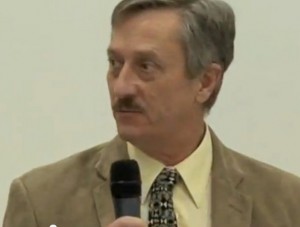
Owen Paterson MP

Even the big GM companies never make all these claims, so who was Paterson speaking for and what is the British agenda? Is the UK government truly concerned about hungry people in Africa and south-east Asia, or is Paterson just doing the work of the few agribusiness giants that want a slice of the vast and growing developing world market?

Similar questions came up nearly 15 years ago when, after the Guardian ran several sceptical articles about the emerging technology, five Monsanto directors asked for a meeting. They came into the offices, met science, environment and business specialists, and within minutes were saying they wanted to feed the world with GM and that anyone who opposed them did not understand the potential of the technology. The impression they gave was that the company, which had just launched what it called a global food revolution, really believed that hunger was caused by a simple lack of food rather than poverty and/or exclusion.

Today, the silver techno-bullet they promised has still not emerged. The industry has failed to make much progress in Europe, but it has overwhelmed the US market, and the GM companies are now close to controlling the key seed supplies of many countries. Their patented GM seeds comprise more than 80% of the US seed market for major crops like soybeans, corn, canola and cotton. By last year, the global area of their crops had reached 170.3m hectares (420m acres) – a supposed 100-fold increase since commercialisation began in 1996.

But behind the rosy statistics another, bumpier, picture emerges of GM's progress. Billions of dollars of public and private money has been spent on research and development, lobbying and the acquisition of seed companies, yet only 17.3m out of a total 513m (3.4%) farmers have ever actually planted GM crops, and most of these have been growing cotton rather than food. Only 28 countries grow the crops, and in the US, where the technology is far and away the most adopted, GM has clearly failed to eradicate hunger and poverty.

Moreover, legitimate concerns over GM safety, the contamination of nearby crops, patents, the amount of pesticides used and the yields these seeds actually produce will not go away.

Paterson said the British public needs to be reassured about the crop's safety, but there is far more at stake in poor countries where agriculture makes up a much greater proportion of farmers. The real fear in many countries is that GM is being used to adopt a certain kind of farming, which inevitably means people being moved off the land, and the power and influence of the world's food and seed industries growing.

Just five companies – Monsanto, Dupont, Syngenta, BASF, Bayer and Dow – now control nearly all GM research, and nearly 60% of all the crops are resistant to the herbicide glyphosate, a product patented by Monsanto. In what may be a sign of what is to come elsewhere, the price of seeds has spiralled in the past five years as the market concentration of the companies has grown.

One big question is whether GM is now yesterday's technology and whether poor countries can leapfrog it to adopt better, more sophisticated, genetic techniques that do not carry the same risks and uncertainties.

In the 15 years since Monsanto commercialised the crops, conventional plant breeding has massively advanced and, thanks to developments in genetic sequencing and "marker assisted breeding", scientists can now combine genetics with conventional breeding, and avoid all the regulatory and political baggage of genetic engineering. In addition, there is much greater understanding that GM is not going to increase yields that much, and that the problem of hunger will not be solved by a few giant companies imposing a discredited technology on vulnerable populations. More


Thursday, June 20, 2013

Are they Mad?

GM crops are safer than conventional crops, says Environment Secretary Owen Paterson

Genetically modified crops are "categorically" safer than conventional crops because they are subjected to much greater scrutiny than traditional varieties, the Environment Secretary Owen Paterson said today.

Stepping up his campaign to grow GM crops in the UK, Mr Paterson used a speech in Hertfordshire to promote genetic engineering of plants and called on the government, industry and scientists to join forces to convert the public in the face of widespread fear and scepticism.

Mr Paterson said GM crops were safer than conventional ones because they use "more precise technology and [come under] greater regulatory scrutiny".

"These products go through the most rigorous system. It's extraordinarily closely regulated, at a national level and at a European level…We have not come up with any evidence of human health being threatened by these products."

Questioned after his speech on whether the safety case for GM crops over conventional one was clear cut, Mr Paterson said: "This isn't speculation. We have had a categoric statement from the [European Commission's] chief scientific officer and you have the biggest field trial in human history when you think of the colossal volume of GM material that has been eaten in all those countries growing GM food."

Kicking off his campaign, Mr Paterson used a speech in Hertfordshire to call on the government, industry and scientists to join forces to convert the public in the face of widespread fear and scepticism.

Mr Paterson, who ultimately wants the European Union to relax very tight restrictions on growing GM plants, wants to make Britain a centre for GM research and development, which has the potential to become a multi-billion pound industry. He began by arguing what he claims is the moral case for "engineering" crops.Mr Paterson said in his speech: "I believe there are significant economic, environmental and international development benefits to GM but I am conscious of the views of those who have concerns and who need reassurance on this matter."

"I recognise that we - government, industry, the scientific community and others - owe a duty to the British public to reassure them that GM is a safe, proven and beneficial innovation," he will add, delivered this morning at Rothamsted Research in Harpenden, where a controversial trial of GM wheat is being carried out.

"Used properly GM promises effective ways to protect or increase crop yields. It can also combat the damaging effects of unpredictable weather and disease on crops. It has the potential to reduce fertiliser and chemical use, improve the efficiency of agricultural production and reduce post-harvest losses," he will say.

The Biotechnology and Biological Science Research Council (BBSRC) welcomed Mr Paterson's endorsement of GM, while pointing out that it is not provide a solution to the growing food crisis by itself.

"GM is one tool in a range of options that can help us tackle complex problems, such as the need to produce enough food for a growing population," said Douglas Kell, chief executive of the council, which funds research and training projects.

GM crops are created by taking genes with beneficial qualities from other organisms and injecting them into the plant. They can be engineered to grow faster, increase their resistance to weeds, pests and pesticides, produce extra nutrients or survive harsher weather conditions.

However, while many scientists strongly believe in the benefits of GM crops, opposition remains widespread, both among scientists and the general public. More

How any sane human being can say that natural crops, produced by nature, are inferior to genetically modified crops is beyond belief. Mr. Paterson could perhaps argue that from a food security viewpoint that drought resistant crops may have some benefit, but given the resistance to GMO's by practically everyone except Monsanto and other corporations producing similar genetically altered organisms it would seem that Mr. Paterson is catering to a powerful corporate lobby. Editor


Saturday, June 8, 2013

5 Million Farmers Sue Monsanto for $7.7 Billion

Launching a lawsuit against the very company that is responsible for a farmer suicide every 30 minutes, 5 million farmers are now suing Monsanto for as much as 6.2 billion euros (around 7.7 billion US dollars).

The reason? As with many other cases, such as the ones that led certain farming regions to be known as the ‘suicide belt’, Monsanto has been reportedly taxing the farmers to financial shambles with ridiculous royalty charges.

The farmers state that Monsanto has been unfairly gathering exorbitant profits each year on a global scale from “renewal” seed harvests, which are crops planted using seed from the previous year’s harvest.

The practice of using renewal seeds dates back to ancient times, but Monsanto seeks to collect massive royalties and put an end to the practice. Why? Because Monsanto owns the very patent to the genetically modified seed, and is charging the farmers not only for the original crops, but the later harvests as well. Eventually, the royalties compound and many farmers begin to struggle with even keeping their farm afloat. It is for this reason that India slammed Monsanto with groundbreaking ‘biopiracy’ charges in an effort to stop Monsanto from ‘patenting life’.

Jane Berwanger, a lawyer for the farmers who went on record regarding the case, told the Associted Press:

“Monsanto gets paid when it sell the seeds. The law gives producers the right to multiply the seeds they buy and nowhere in the world is there a requirement to pay (again). Producers are in effect paying a private tax on production.”

The findings echo what thousands of farmers have experienced in particularly poor nations, where many of the farmers are unable to stand up to Monsanto. Back in 2008, the Daily Mail covered what is known as the ‘GM Genocide’, which is responsible for taking the lives of over 17,683 Indian farmers in 2009 alone. After finding that their harvests were failing and they started to enter economic turmoil, the farmers began ending their own lives — oftentimes drinking the very same insecticide that Monsanto provided them with.

As the information continues to surface on Monsanto’s crimes, further lawsuits will begin to take effect. After it was ousted in January that Monsanto was running illegal ‘slave-like’ working rings, more individuals became aware of just how seriously Monsanto seems to disregard their workers — so why would they care for the health of their consumers? In April 2012, another group of farmers sued Monsanto for ‘knowingly poisoning’ workers and causing ‘devastating birth defects’. More


Monday, May 27, 2013

Russia Warns Obama: Global War Over “Bee Apocalypse” Coming Soon

The shocking minutes relating to President Putin’s meeting this past week with US Secretary of State John Kerry reveal the Russian leaders “extreme outrage” over the Obama regimes continued protection of global seed and plant bio-genetic giants Syngenta and Monsanto in the face of a growing “bee apocalypse” that the Kremlin warns “will most certainly” lead to world war.

According to these minutes, released in the Kremlin today by the Ministry of Natural Resources and Environment of the Russian Federation (MNRE), Putin was so incensed over the Obama regimes refusal to discuss this grave matter that he refused for three hours to even meet with Kerry, who had traveled to Moscow on a scheduled diplomatic mission, but then relented so as to not cause an even greater rift between these two nations.

At the center of this dispute between Russia and the US, this MNRE report says, is the “undisputed evidence” that a class of neuro-active insecticides chemically related to nicotine, known as neonicotinoids, are destroying our planets bee population, and which if left unchecked could destroy our world’s ability to grow enough food to feed its population.

So grave has this situation become, the MNRE reports, the full European Commission (EC) this past week instituted a two-year precautionary ban (set to begin on 1 December 2013) on these “bee killing” pesticidesfollowing the lead of Switzerland, France, Italy, Russia, Slovenia and Ukraine, all of whom had previously banned these most dangerous of genetically altered organisms from being used on the continent.

Two of the most feared neonicotinoids being banned are Actara and Cruiser made by the Swiss global bio-tech seed and pesticide giant Syngenta AG which employs over 26,000 people in over 90 countries and ranks third in total global sales in the commercial agricultural seeds market.

Important to note, this report says, is that Syngenta, along with bio-tech giants Monsanto, Bayer, Dow and DuPont, now control nearly 100% of the global market for genetically modified pesticides, plants and seeds.

Also to note about Syngenta, this report continues, is that in 2012 it was criminally charged in Germany for concealing the fact that its genetically modified corn killed cattle, and settled a class-action lawsuit in the US for $105 million after it was discovered they had contaminated the drinking supply of some 52 million Americans in more than 2,000 water districts with its “gender-bending” herbicide Atrazine.

To how staggeringly frightful this situation is, the MNRE says, can be seen in the report issued this past March by the American Bird Conservancy (ABC) wherein they warned our whole planet is in danger, and as we can, in part, read:

“As part of a study on impacts from the world’s most widely used class of insecticides, nicotine-like chemicals called neonicotinoids, American Bird Conservancy (ABC) has called for a ban on their use as seed treatments and for the suspension of all applications pending an independent review of the products’ effects on birds, terrestrial and aquatic invertebrates, and other wildlife.

“It is clear that these chemicals have the potential to affect entire food chains. The environmental persistence of the neonicotinoids, their propensity for runoff and for groundwater infiltration, and their cumulative and largely irreversible mode of action in invertebrates raise significant environmental concerns,” said Cynthia Palmer, co-author of the report and Pesticides Program Manager for ABC, one of the nation’s leading bird conservation organizations.

ABC commissioned world renowned environmental toxicologist Dr. Pierre Mineau to conduct the research. The 100-page report, “The Impact of the Nation’s Most Widely Used Insecticides on Birds,” reviews 200 studies on neonicotinoids including industry research obtained through the US Freedom of Information Act. The report evaluates the toxicological risk to birds and aquatic systems and includes extensive comparisons with the older pesticides that the neonicotinoids have replaced. The assessment concludes that the neonicotinoids are lethal to birds and to the aquatic systems on which they depend.

“A single corn kernel coated with a neonicotinoid can kill a songbird,” Palmer said. “Even a tiny grain of wheat or canola treated with the oldest neonicotinoid — called imidacloprid — can fatally poison a bird. And as little as 1/10th of a neonicotinoid-coated corn seed per day during egg-laying season is all that is needed to affect reproduction.”

The new report concludes that neonicotinoid contamination levels in both surface- and ground water in the United States and around the world are already beyond the threshold found to kill many aquatic invertebrates.” More


Wednesday, May 22, 2013

The Goodman Affair: Monsanto Targets the Heart of Science

Richard Smith, former editor of the British Medical Journal, has jested that instead of scientific peer review, its rival The Lancet had a system of throwing a pile of papers down the stairs and publishing those that reached the bottom. On another occasion, Smith was challenged to publish an issue of theBMJ exclusively comprising papers that had failed peer review and see if anybody noticed. He replied, “How do you know I haven’t already done it?”

Richard E Goodman

As Smith’s stories show, journal editors have a lot of power in science – power that provides opportunities for abuse. The life science industry knows this, and has increasingly moved to influence and control science publishing.

The strategy, often with the willing cooperation of publishers, is effective and sometimes blatant. In 2009, the scientific publishing giant Elsevier was found to have invented an entire medical journal, complete with editorial board, in order to publish papers promoting the products of the pharmaceutical manufacturer Merck. Merck provided the papers, Elsevier published them, and doctors read them, unaware that the Australasian Journal of Bone and Joint Medicine was simply a stuffed dummy.

Fast forward to September 2012, when the scientific journal Food and Chemical Toxicology (FCT) published a study that caused an international storm (Séralini, et al. 2012). The study, led by Prof Gilles-Eric Séralini of the University of Caen, France, suggested a Monsanto genetically modified (GM) maize, and the Roundup herbicide it is grown with, pose serious health risks. The two-year feeding study found that rats fed both suffered severe organ damage and increased rates of tumors and premature death. Both the herbicide (Roundup) and the GM maize are Monsanto products. Corinne Lepage, France’s former environment minister, called the study “a bomb”.

Subsequently, an orchestrated campaign was launched to discredit the study in the media and persuade the journal to retract it. Many of those who wrote letters to FCT (which is published by Elsevier) had conflicts of interest with the GM industry and its lobby groups, though these were not publicly disclosed.

The journal did not retract the study. But just a few months later, in early 2013 the FCT editorial board acquired a new “Associate Editor for biotechnology”, Richard E. Goodman. This was a new position, seemingly established especially for Goodman in the wake of the “Séralini affair”.

Richard E. Goodman is professor at the Food Allergy Research and Resource Program, University of Nebraska. But he is also a former Monsanto employee, who worked for the company between 1997 and 2004. While at Monsanto he assessed the allergenicity of the company’s GM crops and published papers on its behalf on allergenicity and safety issues relating to GM food (Goodman and Leach 2004).

Goodman had no documented connection to the journal until February 2013. His fast-tracked appointment, directly onto the upper editorial board raises urgent questions. Does Monsanto now effectively decide which papers on biotechnology are published in FCT? And is this part of an attempt by Monsanto and the life science industry to seize control of science?

To equate one journal with “science” may seem like an exaggeration. But peer-reviewed publication, in the minds of most scientists, is science. Once a paper is published in an academic journal it enters the canon and stands with the discovery of plate tectonics or the structure of DNA. All other research, no matter how groundbreaking or true, is irrelevant. As a scientist once scathingly said of the “commercially confidential” industry safety data that underpin approvals of chemicals and GM foods, “If it isn’t published, it doesn’t exist.”

Goodman’s ILSI links

The industry affiliations of FCT’s new gatekeeper for biotechnology are not restricted to having worked directly for Monsanto. Goodman has an active and ongoing involvement with the International Life Sciences Institute (ILSI). ILSI is funded by the multinational GM and agrochemical companies, including Monsanto. It develops industry-friendly risk assessment methods for GM foods and chemical food contaminants and inserts them into government regulations.

ILSI describes itself as a public interest non-profit but its infiltration of regulatory agencies and influence on risk assessment policy has become highly controversial in North America and Europe. In 2005 US-based non-profits and trade unions wrote to the World Health Organization (WHO) protesting against ILSI’s influence on international health standards protecting food and water supplies. As a result, the WHO barred ILSI from taking part in WHO activities setting safety standards, because of its funding sources. And in Europe in 2012, Diana Banati, then head of the management board at the European Food Safety Authority (EFSA), had to resign over her undisclosed long-standing involvement with ILSI (Robinson et al. 2013).

Goodman’s appointment to FCT is surprising also for the fact that the journal already has expertise in GM food safety. Of the four senior editors, José L. Domingo is a professor of toxicology and environmental health and author of two comprehensive reviews of GM food safety studies (Domingo 2007; Domingo and Bordonaba 2011). Both reviews expressed skepticism of the thesis that GMOs are safe. Consequently, it is far from clear why FCT needs an “associate editor for biotechnology”, but it is clear why Monsanto would have an interest in ensuring that the “Séralini affair” is never repeated.

Editing the scientific record: The case of Paul Christou

FCT is not the only academic journal that appears to have been captured by commercial interests. After the initial campaign failed to get FCT to retract the Séralini study, the journal Transgenic Researchpublished a heavy-handed critique of the study and of the researchers themselves (Arjo et al., 2013). The lead author of that critique was Paul Christou.

Christou and co-authors castigated the editor of FCT for publishing the study, calling it “a clear and egregious breach of the standards of scientific publishing”. They insisted that the journal editor retract the study “based on its clearly flawed data, its breaches of ethical standards, and the strong evidence for scientific misconduct and abuse of the peer-review process”. “Even a full retraction of the Séralini article” wrote Christou, “will not cleanse the Internet of the inflammatory images of tumorous rats.”

The same writers further implied that the Séralini study was “fraudulent”, that the researchers failed to analyse the data objectively, and that the treatment of the experimental animals was inhumane.

This is not the first time Christou has attacked scientific findings that have raised doubts about GM crops. In 2001 Ignacio Chapela and David Quist of the University of California, Berkeley, reported in the journal Nature that indigenous Mexican maize varieties had become contaminated with GM genes (Quist and Chapela, 2001). This issue was, and remains, highly controversial since Mexico is the genetic centre of origin for maize. In an exact parallel with the Séralini study, an internet campaign was waged against Chapela and Quist demanding that the journal retract the study. Then Christou, just as he was later to do with the Séralini study, attacked Chapela and Quist’s paper in an article in Transgenic Research. The title said it all: “No credible scientific evidence is presented to support claims that transgenic DNA was introgressed into traditional maize landraces in Oaxaca, Mexico” (Christou, 2002).

Responding to the campaign, Nature editor Philip Campbell asked Chapela and Quist for more data, which they provided, and arranged another round of peer review. Only one reviewer in the final group of three supported retraction, and no one had presented any data or analysis that contradicted Chapela and Quist’s main finding. Nevertheless, Nature asserted, “The evidence available is not sufficient to justify the publication of the original paper”. Some subsequent investigations, testing different samples, reported finding GM genes in native landraces of Mexican corn (Pineyro-Nelson et al. 2009), while others did not (Ortiz-Garcia et al. 2005).

Paul Christou, in contrast, probably did not have much trouble getting either of his critiques published inTransgenic Research. He is the journal’s editor-in-chief. And, like Goodman, Christou is connected to Monsanto. Monsanto bought the GM seed company Agracetus (Christou’s former employer) and Monsanto now holds patents for the production of GM crops on which Christou is named as the inventor. It is normal practice to declare inventor status on patents as a competing interest in scientific articles, but Christou did not disclose either conflict of interest – his editorship of the journal or his patent inventor status – in his critique of the Séralini study.

The Ermakova affair: Preemptive editing of the scientific record

Not only can journal editors prevent the publication of research showing problems with GM crops in their own journals – they can effectively prevent publication elsewhere. In 2007, the leading academic journal Nature Biotechnology featured an extraordinary attack on the work of Russian scientist, Irina Ermakova (Marshall, 2007). Her laboratory research had found decreased weight gain, increased mortality, and decreased fertility in rats fed GM Roundup-tolerant soy over several generations (Ermakova, 2006; Ermakova, 2009). More


Thursday, April 4, 2013

Mystery Malady Kills More Bees, Heightening Worry on Farms

BAKERSFIELD, Calif. — A mysterious malady that has been killing honeybees en masse for several years appears to have expanded drastically in the last year, commercial beekeepers say, wiping out 40 percent or even 50 percent of the hives needed to pollinate many of the nation’s fruits and vegetables.

A conclusive explanation so far has escaped scientists studying the ailment, colony collapse disorder, since it first surfaced around 2005. But beekeepers and some researchers say there is growing evidence that a powerful new class of pesticides known as neonicotinoids, incorporated into the plants themselves, could be an important factor.

The pesticide industry disputes that. But its representatives also say they are open to further studies to clarify what, if anything, is happening.

“They looked so healthy last spring,” said Bill Dahle, 50, who owns Big Sky Honey in Fairview, Mont. “We were so proud of them. Then, about the first of September, they started to fall on their face, to die like crazy. We’ve been doing this 30 years, and we’ve never experienced this kind of loss before.”

In a show of concern, the Environmental Protection Agency recently sent its acting assistant administrator for chemical safety and two top chemical experts here, to the San Joaquin Valley of California, for discussions.

In the valley, where 1.6 million hives of bees just finished pollinating an endless expanse of almond groves, commercial beekeepers who only recently were losing a third of their bees to the disorder say the past year has brought far greater losses.

The federal Agriculture Department is to issue its own assessment in May. But in an interview, the research leader at its Beltsville, Md., bee research laboratory, Jeff Pettis, said he was confident that the death rate would be “much higher than it’s ever been.”

Following a now-familiar pattern, bee deaths rose swiftly last autumn and dwindled as operators moved colonies to faraway farms for the pollination season. Beekeepers say the latest string of deaths has dealt them a heavy blow.

Bret Adee, who is an owner, with his father and brother, of Adee Honey Farms of South Dakota, the nation’s largest beekeeper, described mounting losses.

“We lost 42 percent over the winter. But by the time we came around to pollinate almonds, it was a 55 percent loss,” he said in an interview here this week.

“They looked beautiful in October,” Mr. Adee said, “and in December, they started falling apart, when it got cold.”

Mr. Dahle said he had planned to bring 13,000 beehives from Montana — 31 tractor-trailers full — to work the California almond groves. But by the start of pollination last month, only 3,000 healthy hives remained.

Annual bee losses of 5 percent to 10 percent once were the norm for beekeepers. But after colony collapse disorder surfaced around 2005, the losses approached one-third of all bees, despite beekeepers’ best efforts to ensure their health.

Nor is the impact limited to beekeepers. The Agriculture Department says a quarter of the American diet, from apples to cherries to watermelons to onions, depends on pollination by honeybees. Fewer bees means smaller harvests and higher food prices.

Almonds are a bellwether. Eighty percent of the nation’s almonds grow here, and 80 percent of those are exported, a multibillion-dollar crop crucial to California agriculture. Pollinating up to 800,000 acres, with at least two hives per acre, takes as many as two-thirds of all commercial hives.

This past winter’s die-off sent growers scrambling for enough hives to guarantee a harvest. Chris Moore, a beekeeper in Kountze, Tex., said he had planned to skip the groves after sickness killed 40 percent of his bees and left survivors weakened.

“But California was short, and I got a call in the middle of February that they were desperate for just about anything,” he said. So he sent two truckloads of hives that he normally would not have put to work.

Bee shortages pushed the cost to farmers of renting bees to $200 per hive at times, 20 percent above normal. That, too, may translate into higher prices for food.

Precisely why last year’s deaths were so great is unclear. Some blame drought in the Midwest, though Mr. Dahle lost nearly 80 percent of his bees despite excellent summer conditions. Others cite bee mites that have become increasingly resistant to pesticides. Still others blame viruses.

But many beekeepers suspect the biggest culprit is the growing soup of pesticides, fungicides and herbicides that are used to control pests.

While each substance has been certified, there has been less study of their combined effects. Nor, many critics say, have scientists sufficiently studied the impact of neonicotinoids, the nicotine-derived pesticide that European regulators implicate in bee deaths.

The explosive growth of neonicotinoids since 2005 has roughly tracked rising bee deaths.

Neonics, as farmers call them, are applied in smaller doses than older pesticides. They are systemic pesticides, often embedded in seeds so that the plant itself carries the chemical that kills insects that feed on it.

Older pesticides could kill bees and other beneficial insects. But while they quickly degraded — often in a matter of days — neonicotinoids persist for weeks and even months. Beekeepers worry that bees carry a summer’s worth of contaminated pollen to hives, where ensuing generations dine on a steady dose of pesticide that, eaten once or twice, might not be dangerous. More

Given that these useful insects polinate many of our food crops we really need to solve this issue as soon as possible. It may be that neonicotinoids need to be banned immediatly before the situation gets worse. We cannot afford to take chances with our food security. Editor


Sunday, March 17, 2013

"The Consumer's Got to Change the System": Farmer Ben Burkett on Racism and Corporate Control of Agriculture

Ben Burkett is a family farmer and coordinator of the Federation of Southern Cooperatives for the state of Mississippi. He is also president of the board of the National Family Farm Coalition and a member of the food sovereignty commission of Via Campesina, the international network of small farmers and landless people. He gave the following interview one early morning in New Orleans, where he went to deliver a truckload of his cooperatives’ okra to Whole Foods:

The Federation of Southern Cooperatives grew out of the civil rights movement. We are probably 90 percent African American, but we have white, Native American, and Hispanic farmers. Racism is still here in the marketplace and in credit, but we have learned to deal with it and not give up on changing the system. We struggle every day to bring about a change.

We work with co-ops in 16 Southern states. Everything we’re about is food sovereignty, though I don’t think that many farmers in Mississippi really know the term. It’s the right of every individual on earth to wholesome food, clean water, clean air, clean land, and the self-determination of a local community to their rights of intellectual property to grow and to do what they want.


We just recognize the natural flow of life; it’s just what we’ve always done. Like myself, I’m a fourth-generation farmer on a farm that my great-grandfather homesteaded in 1889. That wasn’t but about 20 years after the end of slavery. He got 164 acres from the United States government. I still have the title – they called it a patent – signed by Grover Cleveland. And we’re still farming that same land.

Our view is local production for local consumption. The crops we grow, we sell them mostly within a 300-mile radius of this [Indian Springs Farmers Association-owned] packing facility.

We don’t want a change. We just want to go back to the way things were. It’s just supporting mankind as small farmers and family farmers. It’s not so much a matter of making money, it’s a matter of carrying on so your farm will continue on. But you have to make some profit off it in order to keep it going.


Some say the system is working. It appears to be working fine, but corporate agriculture is not sustainable. Our system of growing food is heavy, heavy, heavy dependent on petro-chemicals, on inorganic compounds, mostly petroleum-based. And then it takes too much control out of the local community. Now, it might last for several decades, but in the end it can’t last.

You’ve got a few companies that want to control all the seedstock of the world, and they’ve just about got a handle on marketing three of the main commodities: corn, soybean, and cotton. It’s hard to find seeds that aren’t treated with the Monsanto-manufactured Roundup Ready. I’ve tried to find cotton that wasn’t treated, but I couldn’t. Now they’re working on controlling wheat and rice.


And they make those seeds so most of them don’t regenerate the next year anyway. But if you do save any of the seeds, Monsanto and the other companies are going to prosecute you for saving their property. Those seeds are patented, the property of the seed company, so they reserve the right to keep them. They’ll take you to court and make you pay back their money. Basically you’re just sharecropping for them, you’re leasing their seeds.


I don’t think that’s fair. Once you’ve bought the seeds and planted them on your own land, it looks to me like they ought to be your own seeds. That’s the essence of life. Where did Monsanto and the other companies get their first seed from? Someone gave them to them. Those seeds didn’t fall out of the sky.

Through the National Family Farm Coalition, we signed onto the protest against the seeds Monsanto sent to Haiti. Developing countries such as Haiti have no need for Monsanto, for hybrid seeds or GMO seeds, no kind of way. Let them use their traditional seeds they’ve been saving for hundreds of years. Let them propagate and then continue to farm traditionally. Because if they get used to buying from America, they’ll lose the diversity of seed that they need in order to build new seed. Normally when those types of seeds and other products from America hit a country, local farmers lose. They get put out of business, they can’t compete.


We’ve been – I don’t want to use the word co-opted – trained by the institutions of agriculture, the companies, the university system, and technology, to give our rights over to the company, which I think is absolutely wrong. We have to be more proactive than reactive as small farmers, family farmers. We can’t wait for the government and large corporations to dictate to us what we can do in our region. More


Saturday, February 23, 2013

Monsanto Conquest Attempt Meets Aztec Resistance

Monsanto has a map for conquering the world and Mexico is in the center of it.

For nearly two decades the transnational corporation that manufactures the pesticides used across the planet has been trying to take over the global seed market with genetically modified (GM) seed. If successful, most of the food we grow and eat would have to be purchased annually as seed from Monsanto. The mutant plants would grow up addicted to Monsanto herbicides. Local varieties would disappear, and in their place standardized, genetically modified food–doused with chemicals–would fill supermarket shelves and corner stores.

More than sixty thousand farmers and supporters from workers’ and environmental organizations marched through Mexico City on Jan. 31 to avoid this fate. It was one of the largest mobilizations to date to reject the Monsanto game plan, and it’s no coincidence that it took place in the heart of the Aztec Empire.

Olegario Carrillo, president of Mexican small farm organization UNORCA, addressed the crowd in the central plaza, “During the last 30 years, successive governments have tried to wipe us out. They’ve promoted measures to take away our lands, our water, our seeds, plant and animal varieties, traditional knowledge, markets. But we refuse to disappear.”

“For peasant farmers, GMOs represent looting and control,” he stated.

With tens of thousands of people shouting “No genetically modified corn in Mexico!” and “Monsanto get out!”, the march showed the muscle of an unusual grassroots movement to protect small farmers and consumers. It also revealed the remarkable success of decades of public education and organizing on an issue that Monsanto and other major biotech firms hoped would slide under the radar of the people most affected by it.

Monsanto–along with Pioneer, Dow and other chemical/biotech firms– has been pushing hard to take over production of the world’s third major staple crop: corn. Small farmers in the U.S. have long experienced the pressure exerted to move them out of the way. Monsanto predicts that its corn seed will be planted on 96 million acres in the United States this year. But the key to its plans to conquer the market lies south of the border.

The powerful corporation, the largest seed seller in the world, desperately wants permission for unrestricted planting of its GM corn in Mexico. If GM corn is planted in Mexico, it will accelerate the transfer of acreage and water rights from small farmers to corporate GM corn cultivation, thus transferring control of the national food supply as well. Widespread open planting of GM corn will lead to contamination of native varieties. This is a scientific fact. Mexico has already detected many native cornfields contaminated by GM corn during the period when open planting was prohibited—a strong indication of the impossibility of controlling open pollination between native and GM varieties.

This has huge implications. Mexico is the center of origin of corn, and the home of hundreds of varieties developed by indigenous communities over centuries. To lose in situ preservation of these varieties is to lose a wealth of agro-diversity that has major importance for sustainable food production, and to eventually become dependent on Monsanto and other large corporations to feed ourselves.

The Mexican government first legalized GM plantings through what has come to be known as the 2005 “Monsanto Law”, which the farmers are demanding be revoked. It then began issuing permits, first for experimental plantings. Having passed that phase, Monsanto has now requested permits to begin all-out commercial production. It has filed to sow some 700,000 hectares of genetically modified corn in the state of Sinaloa alone. More


Saturday, February 16, 2013

Opposition crops up to GMO foods in Hawaii

Lihue, Hawaii - Famous the world over as a tropical vacation spot, the Hawaiian Islands are less well-known as ground zero in the debate over genetically modified organisms (GMO), the open-air testing of pesticide-resistant crops and the ethics of patenting genetically engineered (GE) plant life.

Hawaii is home to one of the world’s greatest concentrations of GMO research fields by five of the largest biotechnology and chemical companies: Monsanto, Dow AgroSciences, Syngenta, DuPont Pioneer and BASF.

These transnational corporations prefer Hawaii for growing and testing GE crops because of its abundant sunshine, rainfall and year-round growing climate. GMO opponents say the companies also enjoy Hawaii’s isolation, largely removed from the public eye.

Yet these companies, which have been in Hawaii for decades, are now facing increasing opposition from residents concerned about GMOs, the health and environmental impacts of pesticides and what they see as a lack of oversight and transparency.

When the Hawaii state legislature convened this January, on its schedule were a dozen bills seeking to regulate, limit or ban the sale and import of GMOs. This month, two of the bills were approved by committee, an important step towards becoming law.

Labelling dispute

Hawaii's House Bill 174 calls for labelling imported genetically engineered fresh produce. If passed, Hawaii would be the first US state to require labelling of GMO foods.

Unlike Japan, China, Russia, the European Union and dozens of other countries, the US does not require GMO foods to be labelled.

Opponents of labelling include Alicia Maluafiti, executive director of the Hawaii Crop Improvement Association, a trade association representing biotech companies. She says the burden of labelling should be on foods that do not include GMOs.

Scott McFarland, government and public affairs leader with Dow AgroSciences in Hawaii, says his company "actually has no position on food labelling”. He characterises Dow’s work in Hawaii as “parent seed expansion”, developing commercial seeds to be exported outside the US.

Shiva's visit

Hawaii's fight over GMO foods has garnered worldwide attention. Last month internationally renowned environmentalist and philosopher Dr Vandana Shiva travelled from New Delhi to Hawaii to speak to anti-GMO activists, community groups and lawmakers who are increasingly concerned about the role of GMOs in the US' 50th state. "I think your island is truth-speaking to the world that GMOs are an extension of pesticides, not a substitute or alternative to it,” she told an audience on the island of Kauai.

Shiva is best known for her opposition to GMO crops, globalisation, the privatisation of land and water and what she describes as a "war against the earth.”

The 1993 recipient of the Right Livelihood Award (also known as the "Alternative Nobel Prize") and founder of Navdanya, a programme dedicated to protecting traditional crops through seed banking, Shiva was invited to the islands by Hawaii SEED, a coalition of grassroots groups promoting alternatives to GE farming.

"[Hawaii] has become like a nerve centre for the expansion of destruction,” Shiva said. "GMOs are not a safe alternative to poisons, they are pushed by a poison industry to increase the sale of both the poisons and simultaneously monopolise the seed."

Evoking the 1984 Bhopal, India disaster when a chemical leak from a Union Carbide plant (now a subsidiary of Dow Chemical) killed and injured tens of thousands, Shiva - who was trained as a physicist - embarked on a connect-the-dots tour of how she says yesterday's war chemicals manufacturers reinvented themselves as the agrochemical industry, before mutating into the biotech industry.

"War and agriculture came together when the chemicals that were produced for warfare lost their market - and the industry organised itself to sell those chemicals as agrochemicals,” Shiva said. As gene splicing techniques advanced, she said corporations saw GE crops as a means to claim creative and inventive rights, patent seeds and collect royalties.

Joining Shiva were community activist Walter Ritte and public interest lawyer Andrew Kimbrell, executive director of the Center for Food Safety in Washington.

In the 1970s Ritte was at the centre of direct action against the US military which, at the time, was using the Hawaiian island of Kahoolawe as a bombing range. Eventually the movement was successful in ending weapons testing on the island. Today Ritte focuses his activism on stopping GMO farming.

Kimbrell told the audience that genetic engineering at its essence violates nature's most fundamental codes. "They're treating animals and seed as though they're machines and using machine value on the life forms. That's why we call it genetic engineering.”

Citing a Union of Concerned Scientists 2009 report entitled Failure to Yield, Kimbrell spoke of what he called "GMO myths” and said that, at a minimum, GMOs should be labelled.

"It's not a matter of if we're going to have labelling, it's when. It would be great if Hawaii did it first,” Kimbrell said.

A 'war on earth'


Travelling from Hawaii's Big Island for Shiva's visit, Jerry Konanui, an eighth-generation taro farmer, rejects the notion that genetic engineering, monocropping and the use of chemical pesticides are in Hawaii's best interests. In Hawaii, taro is both a traditional staple crop and also revered as the first ancestor of the Hawaiian people. Currently the genetic engineering of Hawaiian varieties of taro is banned. More


Wednesday, October 3, 2012

Pesticide Use Ramping Up As GMO Crop Technology Backfires

.S. farmers are using more hazardous pesticides to fight weeds and insects due largely to heavy adoption of genetically modified crop technologies that are sparking a rise of "superweeds" and hard-to-kill insects, according to a newly released study.

Genetically engineered crops have led to an increase in overall pesticide use, by 404 million pounds from the time they were introduced in 1996 through 2011, according to the report by Charles Benbrook, a research professor at the Center for Sustaining Agriculture and Natural Resources at Washington State University.

Of that total, herbicide use increased over the 16-year period by 527 million pounds while insecticide use decreased by 123 million pounds.

Benbrook's paper -- published in the peer-reviewed journal Environmental Sciences Europe over the weekend and announced on Monday -- undermines the value of both herbicide-tolerant crops and insect-protected crops, which were aimed at making it easier for farmers to kill weeds in their fields and protect crops from harmful pests, said Benbrook.

Herbicide-tolerant crops were the first genetically modified crops introduced to world, rolled out by Monsanto Co. in 1996, first in "Roundup Ready" soybeans and then in corn, cotton and other crops. Roundup Ready crops are engineered through transgenic modification to tolerate dousings of Monsanto's Roundup herbicide.

The crops were a hit with farmers who found they could easily kill weed populations without damaging their crops. But in recent years, more than two dozen weed species have become resistant to Roundup's chief ingredient glyphosate, causing farmers to use increasing amounts both of glyphosate and other weedkilling chemicals to try to control the so-called "superweeds."

"Resistant weeds have become a major problem for many farmers reliant on GE crops, and are now driving up the volume of herbicide needed each year by about 25 percent," Benbrook said.

Monsanto officials had no immediate comment.

"We're looking at this. Our experts haven't been able to access the supporting data as yet," said Monsanto spokesman Thomas Helscher.

Benbrook said the annual increase in the herbicides required to deal with tougher-to-control weeds on cropland planted to genetically modified crops has grown from 1.5 million pounds in 1999 to about 90 million pounds in 2011.

Similarly, the introduction of "Bt" corn and cotton crops engineered to be toxic to certain insects is triggering the rise of insects resistant to the crop toxin, according to Benbrook.

Insecticide use did drop substantially - 28 percent from 1996 to 2011 - but is now on the rise, he said.

"The relatively recent emergence and spread of insect populations resistant to the Bt toxins expressed in Bt corn and cotton has started to increase insecticide use, and will continue to do so," he said. More