Sunday, February 26, 2012

Protect Your Food Security


The Food Movement Speaks With oneVoice: Occupy our Food Supply

Willie Nelson, Anna Lappe, Vandana Shiva, Michael Pollan, Raj Patel, Marion Nestle and Many Others Join 60+ Occupy Groups and 30+ Environmental and Food Groups for Global Day of Action 
Monsanto and Cargill rise to top of food movement’s ire 
SAN FRANCISCO (Thursday, February 23): On February 27, an unprecedented alliance of more than60 Occupy groups and 30 environmental, food and corporate accountability organizations have joined together for Occupy our Food Supply, a global day of action resisting the corporate control of food systems.

The call to Occupy our Food Supply, facilitated by Rainforest Action Network, is being echoed by prominent thought leaders, authors, farmers and activists including the Indian environmentalist Vandana Shiva, Food Inc.’s Robert Kenner, music legend Willie Nelson, actor Woody Harrelson, and authors Michael Pollan, Raj Patel, Anna Lappe, Gary Paul Nabhan, and Marion Nestle, among others. (See quotes in release below). The central theme uniting this diverse coalition is a shared sense of urgency to resist the corporate consolidation of food systems and create socially and environmentally just local solutions.

"Nothing is more important than the food we eat and the family farmers who grow it," said Willie Nelson, Founder and President of Farm Aid. "Corporate control of our food system has led to the loss of millions of family farmers, destruction of our soil, pollution of our water and health epidemics of obesity and diabetes. We simply cannot afford it. Our food system belongs in the hands of many family farmers, not under the control of a handful of corporations."

From Brazil, Hungary, Ireland, and Argentina to dozens of states in the US, thousands of people will be participating in the February 27 global day of action.  Participants will be reclaiming unused bank-owned lots to create community gardens; hosting seed exchanges in front of stock exchanges; labeling products on grocery store shelves that have genetically engineered ingredients; building community alliances to supportlocally owned grocery stores and resist Walmart megastores; and protesting food giants Monsanto and Cargill.

“Occupy our Food Supply is a day to reclaim our most basic life support system – our food – from corporate control. It is an unprecedented day of solidarity to create local, just solutions that steer our society away from the stranglehold of industrial food giants like Cargill and Monsanto,” said Ashley Schaeffer, Rainforest Agribusiness campaigner with Rainforest Action Network (RAN), of the day of action,

Never have so few corporations been responsible for more of our food chain. Of the 40,000 food items in a typical US grocery store, more than half are now brought to us by just 10 corporations. Today, three companies process more than 70 percent of all U.S. beef, Tyson, Cargill andJBS.[1] More than ninety percent of soybean seeds and 80 percent of corn seeds used in the United States are sold by just one company: Monsanto. Four companies are responsible for up to 90 percent of the globaltrade in grain. And one in four food dollars is spent at Walmart.

The overwhelming support for Occupy our Food Supply underscores the unity between farmers, parents, health care professionals, human rights activists, food justice advocates and food lovers around the world who are increasingly viewing their concerns as different manifestations of the same underlying problem: a food system structured for short term profit instead of the long term health of people and the planet.

Supporting groups include: Bay Localize, Berkeley Association for Animal Advocacy, Biosafety Alliance, California Food and Justice Coalition, Chiapas Support Committee, Family Farm Defenders, Food Democracy Now, Food First, National Family Farms Coalition, PAN (Pesticide Action Network), Pesticide Watch, Planting Justice, Occupy Big Food, Occupy Claremont, Occupy Cargill, Occupy DC, Occupy Delaware, Occupy Denver, Occupy Farms, Occupy for Animal Rights, Occupy Fort Lauderdale, Occupy Food, OccupyGardens Toronto, Occupy Jacksonville, Occupy Maine, Occupy MN/Seeds of Change, Occupy Monsanto, Occupy Philly (Occupy Vacant Lots), Occupy Portland, OWS-Food Justice
OWS Puppets, OWS Sustainability, Occupy Santa Cruz, Occupy SF Environmental Justice Working Group, and Occupy the Food System- Oakland, among many others.

See list of supporting organizations and individuals below. For more information on the events planned for Occupy our Food Supply, visit www.occupyourfoodsupply.org.

Tuesday, February 21, 2012

Somalia's Rich Maritime Resources Being Plundered, Report Says

UNITED NATIONS, Feb 21, 2012 (IPS) - The international community has failed to grapple with the real underlying political and economic issues facing the troubled East African nation of Somalia, which has been surviving without an effective government for over two decades, according to a new study released here.

With the country's 3,300-km coastline virtually unprotected, industrial fishing vessels from Europe and Asia have entered the area in large numbers and are plundering Somalia's rich maritime resources.

With the country's 3,300-km coastline virtually unprotected, industrial fishing vessels from Europe and Asia have entered the area in large numbers and are plundering Somalia's rich maritime resources. Authored by Suzanne Dershowitz and James Paul, the report was released ahead of a high-level international conference on Somalia scheduled to take place in London Feb. 23. More


Monday, February 20, 2012

Models Underestimate Future Temperature Variability: Food Security at Risk

ScienceDaily (Feb. 17, 2012) — Climate warming caused by greenhouse gases is very likely to increase the variability of summertime temperatures around the world by the end of this century, a University of Washington climate scientist said Friday. The findings have major implications for food production.

Current climate models do not adequately reflect feedbacks from the relationship between the atmosphere and soil, which causes them to underestimate the increase of variability in summertime temperatures, said David Battisti, a UW professor of atmospheric sciences.

While warmer temperatures already have implications for food production in the tropics, the new findings suggest the increase in the volatility of summertime temperatures will have serious effects in grain-growing regions of Europe and North and South America, Battisti said.

"If there's greater variability, the odds of the temperature being so high that you can't grow a crop are greater," he said. "In terms of regional and global food security, it's not good news."

Battisti presented his findings at the American Association for the Advancement of Science meeting in Vancouver, Canada. His discussion was part of a panel on climate and global food security that included Rosamond Naylor of Stanford University and Daniel Vimont of the University of Wisconsin, with whom he has collaborated on previous food security research. More


Sunday, February 19, 2012

FOA Expert: Adopt 'Climate Smart' Agriculture

AN expert from the Food and Agriculture Office (FAO) is pitching calls for the adoption of “climate-smart agriculture” to address the twin challenges of achieving food security and climate change.

Hideki Kanamaru of the Climate, Energy and Tenure Division (NRC) of the FAO told participants of the APEC Symposium on Climate Change held at the Shangri-la Hotel in Manila last week that there is a need to transform agricultural systems to achieve productivity that will support national food security and development goals of APEC member economies.

Transforming agricultural systems means intensifying production systems that will empower farmers to avail themselves of and effectively apply technologies and techniques that will reduce greenhouse gas emissions in agriculture, particularly in irrigated rice production.

Hosted by the Philippines through the Department of Agriculture, the symposium dubbed “Adaptation Strategies with Mitigation Potential for Food and Water Security was attended by policy makers and implementers, researchers, scientists and practitioners from APEC economies and selected organizations.

Alicia Ilaga, focal person of the Department of Agriculture – APEC and Climate Change office said the symposium intended to initiate and sustain information exchange among resource speakers and participating APEC economies on adaptation strategies in agriculture with mitigation potentials.

Kanamaru said FAO is promoting “climate-smart agriculture,” a concept to transform agricultural to enhance the achievement of national food security and development goals in the face of climate change.

Climate-smart agriculture consists of three major pillars: sustainably intensified production systems to achieve productivity increases, climate- change adaptation, and climate-change mitigation.

Adoption of new technologies such as adaptation and mitigation practices, however, is faced with several limitations such as lack of tenure, security and limited property rights which may hinder adoption of practices, he said. More


Monday, February 6, 2012

The seed emergency: The threat to food and democracy

 New Delhi, India - The seed is the first link in the food chain - and seed sovereignty is the foundation of food sovereignty. 
In India, 95 per cent of cotton seeds are reportedly controlled by Monsanto, a US biotechnology corporation [EPA]

If farmers do not have their own seeds or access to open pollinated varieties that they can save, improve and exchange, they have no seed sovereignty - and consequently no food sovereignty.
The deepening agrarian and food crisis has its roots in changes in the seed supply system, and the erosion of seed diversity and seed sovereignty.
Seed sovereignty includes the farmer’s rights to save, breed and exchange seeds, to have access to diverse open source seeds which can be saved - and which are not patented, genetically modified, owned or controlled by emerging seed giants. It is based on reclaiming seeds and biodiversity as commons and public good.
 Farmer suicides spike in India
The past twenty years have seen a very rapid erosion of seed diversity and seed sovereignty, and the concentration of the control over seeds by a very small number of giant corporations. In 1995, when the UN organised the Plant Genetic Resources Conference in Leipzig, it was reported that 75 per cent of all agricultural biodiversity had disappeared because of the introduction of “modern” varieties, which are always cultivated as monocultures. Since then, the erosion has accelerated. More
 

Wednesday, January 25, 2012

Climate Change and Farming: How Not to Go Hungry in a Warmer World

 Climate change might hit us in the most vital place of all — the dinner plate Why do we care about climate change? 

Obviously we worry about what warming temperatures might do to the geography of the planet — particularly melting polar ice and raising global sea levels. We fear the impact that climate change could have on endangered species, as warming temperatures speed the already rapid pace of extinction for wildlife that have been pushed to the edge by habitat loss and hunting. We focus on the changing risk of extreme weather, of more powerful storms causing billions of dollars of damage in richer nations — and taking thousands of lives in poorer ones. Sometimes we're simply uneasy with idea that our actions are altering the Earth, changing the rhythms of the seasons, shifting weather patterns we've been accustomed to for as long as human beings can remember.
 
All of that is important — but not as important as the impact that climate change might have on the most vital function of any species: feeding itself. The human population broke the 7 billion mark late last year, and the reason that happened — and the reason we can and will keep growing, barring major changes — is that we've become amazing proficient at raising food. Our distribution is far from perfect — which is the reason the world is simultaneously home to 1 billion hungry and more than 300 million obese people — and the side effects of large-scale farming can damage the environment. But food production still remains humanity's most amazing accomplishment. 
That's why the threat that climate change could mess with agriculture is so scary — and why experts are worried that we're not stepping up to the challenge. In last week's Science, an international group of leading investigators — led by John Beddington, the chief science adviser for the British government — published a call urging policymakers to ensure that agriculture becomes a more vital part of global action against climate change. "Global agriculture must produce more food to feed a growing population," they write. "Yet scientific assessments point to climate change as a growing threat to agricultural yields and food security." In other words, the potential risks to farming are one more reason we need to reduce carbon emissions soon — and the fact that the climate is already changing, and will continue to change, means that we also need to start adapting agriculture to a warmer world immediately. More


Saturday, January 21, 2012

Untitled

The growing season of 2011 was not kind to the southern United States and northern Mexico. 
 
As racing fires, heat, and record-dry conditions in Texas claimed attention, crops were quietly failing across the border in northern Mexico. In January 2012, the impact of the drought came to public notice, as communities began to suffer severe food shortages. On January 17, the Mexican government announced that it was distributing food to particularly hard-hit indigenous Tarahumara communities in northern Mexico’s Chihuahua state.This image shows vegetation growth between July and September, the heart of the growing season. 
The image was made with data from the Moderate Resolution Imaging Spectroradiometer (MODIS) on NASA’s Terra satellite, which measures both near infrared light and visible light. Healthy plants absorb visible light and reflect infrared light. By comparing the amount of visible and infrared light reflected from a region, scientists can estimate the density of healthy plants, a measurement called a vegetation index. In this case, the vegetation index from the 2011 growing season is compared with the average vegetation index observed between 2000 and 2010. 
 
Areas in which plants grew more than average are green, and areas where plants grew less are brown.Drought clearly slowed plant growth in both the United States and Mexico. The drought is the worst in northern Mexico in 71 years, the Mexican government reported. The 2010-2011 La Niña likely contributed to the drought’s severity.ReferencesBBC News. (2012, January 17). Mexico food aid sent to crisis-hit Tarahumara Indians. More
 
Accessed January 20, 2012.Government of Mexico. (2012, January 17). Llegan las nuevas despensas de Sedesol a la Sierra Tarahumara. (Spanish). Published on ReliefWeb. Accessed January 20, 2012.Weir, J. and Herring, D. (n.d.). Measuring Vegetation (NDVI and EVI). NASA Earth Observatory. Accessed January 20, 2012.NASA Earth Observatory image created by Jesse Allen, using MODIS data provided by Jennifer Small and Assaf Anyamba, NASA GIMMS Group at Goddard Space Flight Center and the Global Agricultural Monitoring Project (GLAM) Project. Caption by Holli Riebeek. More
 

Saturday, January 7, 2012

No therapy in retail


New Delhi, India - In November 2011, when the UPA government announced that it had cleared the entry of big retail chains such as Walmart and Tesco into India through 51 per cent Foreign Direct Investment (FDI) in multi-brand retail, it justified the decision saying that FDI in retail would boost food security and benefit farmers' livelihoods.

But the assurance that FDI in retail would ease inflation did not resolve the political crisis the government was facing; it deepened it. Parliament was stalled for several days of the Winter Session, after which the government was forced to withdraw its decision.
The story of FDI in retail goes back to 2005, when Prime Minister Manmohan Singh signed an agriculture agreement with the US, along with the nuclear agreement. On the board of the US-India Knowledge Initiative in Agriculture, as it is called, sit Monsanto (the world's leading producer of GM seeds), ConAgra (among the world's biggest agribusinesses, along with Cargill) and Walmart (the world's largest retail giant).

Protests had prevented Walmart's entry into retail, but, in 2007, it did get a backdoor entry through a joint-venture with Bharti (their stores go by the names of Easyday and Best Price Modern Wholesale). No back-end infrastructure has been built so far, one of the other claims of the government about why we need retail giants.


Farmers' suicides spike in India
The way the UPA government tried to ram through the decision on FDI in retail - without consulting the opposition parties, or even its allies - was clearly undemocratic. But the decision itself was also flawed. It illustrated a disconnect between an ideology based on market fundamentalism - which is the leaning of the present government - and the Indian reality of small farms and small retail. More

Wednesday, December 21, 2011

Droughts could push parts of Africa back into famine

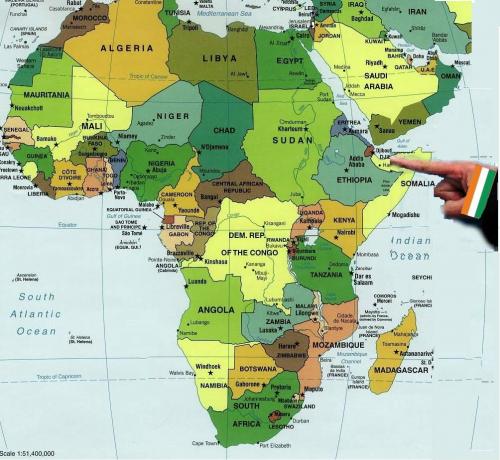
Drought and erratic rains could lead to further food scarcities in Africa warns the United Nations World Food Program (WFP). The WFP singles out South Sudan, the world's newest nation, and Niger as nations of particular concern. Earlier this year famine killed scores of people, including an estimated 30,000 children, in Somalia. In South Sudan drought and ongoing conflict threaten food supplies for 2.7 million people.

"A gathering storm of hunger is approaching South Sudan, caused by crop failure and market disruption," said WFP director in South Sudan, Chris Nikoi. "Food prices have already doubled or tripled in some areas, leaving hundreds of thousands of children vulnerable to malnutrition at a key developmental stage of their young lives." 

The WFP states it is upping operations to feed more people in the new nation in 2012, but warns that lack of infrastructure and land mines makes travel difficult. It says it needs emergency funds of nearly $100 million for food services in South Sudan for the first quarter of 2012.

For further information: http://news.mongabay.com/2011/1218-hance_africa_food.html#ixzz1h06d7mZS

Photo: http://www.esacademic.com/pictures/eswiki/77/Map_sahel.jpg

Tuesday, December 20, 2011

The Indian land grab in Africa

Joining the neo-colonial bandwagon, Indian companies are taking over agricultural land in African nations and exporting produced food at the cost of locals

Indian companies venturing abroad is always regarded as a healthy trend, an indicator of India’s new-found economic status. But little is known about how these companies are flexing their imperalistic muscles in poorer countries, grabbing the land and giving little in return. A report ‘India’s Role in the New Global Farmland Grab’ by researcher Rick Rowden brings forth these atrocities which are shockingly similar to what India used to blame rich western countires for.

Joiing the race with China, Saudi Arabia, Kuwait, South Korea and the European Union, Indian and Indian-owned companies are acquiring land in Africa at throwaway prices, indulging in enviornmental damange and exporting the food while locals continue to starve. The origin of this unhealthy practice can be traced back to the food crisis of 2008 when rich countries were forced to confront the reality of how fragile the global food scenario can be, especially for those without sufficient cultivable land. To ensure more direct control over food, these countries started acquiring land in poorer African countries and shipping the produce back home. A recent World Bank report found that 45 million hectares of large scale farmland deals had been announced between 2008 and 2009. More